
Table of contents 7 sections
Writing articles online, whether for a blog or a magazine, requires deep knowledge of the industry, the company and the target audience, hands-on experience and precise expertise in copywriting and data analysis. Content and copywriting serve branding and lead generation and increase quote requests on your website: here’s a practical, step-by-step guide to increasing visibility and conversions for your brand.
Writing Online vs. Writing Offline: 3 elements you CAN’T ignore
We know by now: writing for the web is very different from writing for offline channels such as print, because online attention is really low, we’re constantly distracted by notifications and pop-ups, and we expect to find solutions to our needs quickly. Here are 3 elements to consider when writing online.
1. The F-Pattern
The F-shape scanning pattern describes how users scan the pages they read online: the shape is exactly that of a capital F. They start reading from left to right, then move down vertically, continue to the right and finally scroll further.
(Video source: Nielsen Norman Group)
You should always keep this pattern in mind to understand how to structure your writing, so:
- prefer short sentences
- make use of white space between paragraphs
- be concise
- avoid overly long and/or complex sentences
- avoid too many subordinate clauses (which we Italians often overuse)
- choose a “subject-verb-object” structure
2. Formatting
As a result, take care of text formatting:
- break up paragraphs with appropriate headings (H2, H3…)
- use bold to highlight certain words (not a whole sentence!)
- avoid underlining because it’s mistaken for a hyperlink
- use bulleted and numbered lists to spell out key concepts in a very readable way
- write a short introduction, then leave room for the informational content and any details, which you’ll add as external links
- add images, videos, checklists, maps, recaps that help summarize what’s written in the article
3. SEO
- work on your SEO Content Strategy
- answer users’ search intents
- use proper formatting (Heading 1, Heading 2, Heading 3 and so on)
- add links natural links both to internal pages of your site and to external in-depth sites that can help readers better understand what you’re writing about
- write the SEO title
- write the SEO meta description
Writing Articles Online: 3 things you need to know
You know the creative who wakes up early, looks out the window and is struck by a brilliant idea to write about? Well, forget all that. Business writing isn’t improvised. It’s studied, analyzed and planned. Content marketing rests on 3 pillars: well-defined goals, a clear strategy and properly set KPIs.
1. Goals
It’s about understanding what you want to achieve with content and copywriting:
- make your brand known to the right audience? That’s brand awareness
- position your brand in the potential customer’s mind with certain characteristics? That’s Brand Positioning
- work on your brand’s reputation by sharing its strengths versus competitors? That’s Brand Reputation
- educate blog readers about the problems your brand solves? That’s Demand Generation
- turn blog readers into real, possibly repeat, customers? That’s Lead Generation
2. Content Marketing Strategy
Having a clear strategy is the starting point: the strategy is like a map that shows where you are and the whole route you need to take to get from point A to point B, including any obstacles. All content marketing and copywriting work should include a strategy that considers:
- goals
- timing
- budget
- who does what
- workflow
- marketing and communication channels
- positioning
- tone of voice
- tools to use
- data to analyze
But that’s not all: the strategy must fit into the broader online Marketing and Communication Plan, because it has to integrate with other activities needed to achieve business results, such as advertising, SEO and email marketing, to name a few.
3. KPIs and data measurement
How can you tell whether the investment serves the results you want if you don’t continuously measure performance against predefined KPIs? Some useful content and copywriting KPIs are:
- number of sessions on the site/blog
- average time spent on the site/blog
- bounce rate
- most visited pages of the site/blog
- exit pages (important for understanding why readers leave the site right after visiting this page instead of browsing other pages)
- inquiries received through the site’s “contact” page
- newsletter sign-ups coming from blog readers
Copywriting for Blogs
Writing for the blog is one of the strategic tasks of content marketing, to:
- increase traffic to the site
- rank the site on Google for certain keywords
- strengthen authority in a given industry, and therefore reputation
- attract target leads
In my work as Content Lead, I often create content marketing strategies, editorial plans for various marketing and communication channels (such as blog, landing pages, social media, email marketing) and blog articles with a conversion copywriting approach, with a twofold goal:
- support “technical” SEO
- generate quote requests
There’s no doubt that blog copywriting is effective not only for branding but also for lead generation, essential for every business that can’t live on visibility alone but needs revenue. There are at least 10 steps to follow to create effective articles for your blog.
1. Study your target audience
You can’t just start writing in WordPress or Word on a whim. How can you craft effective messages if you don’t know your target perfectly? You need to understand:
- how they behave online
- which customer journey they follow
- how they buy online
- which channels of communication they use (you might discover, for example, that they don’t like filling in forms and prefer to call the company)
- what language they use day to day
- what their pains & gains are
To identify your target, try working with:
-
Surveys
They’re short surveys in interview form, which you can send both to former customers and to people who contacted you because they were interested in your product/service. Remember to use a sufficiently valid sample (contrary to what you might think, a reliable number is already 10, you don’t need samples of 1,000 people), to ask closed-endedquestions, to speed up the respondent’s thinking, and to be specific in your questions, because they must leave no room for doubt or misunderstanding, otherwise the survey results won’t be as reliable and truthful. You can use Typeform.com or Surveymonkey.com
-
Listening
This is online research on Google, forums, blogs and social media to understand who talks about a certain topic online, how and why. Go to social media and search both by hashtag and within groups and observe the discussions. For example, search for “heat pumps,” filter by “Groups” on Facebook and read everything users write and how. On Instagram and Twitter, search for #heatpumps. Also browse YouTube and Amazon and look at the comments: how do people write? What language and words do they use? During research for a B2B client we were working with on lead generation, I discovered that the target never used the expression “heat pumps,” only “industrial climate control.” From there, we set all the copy for the website, landing pages and ads around this phrase.

-
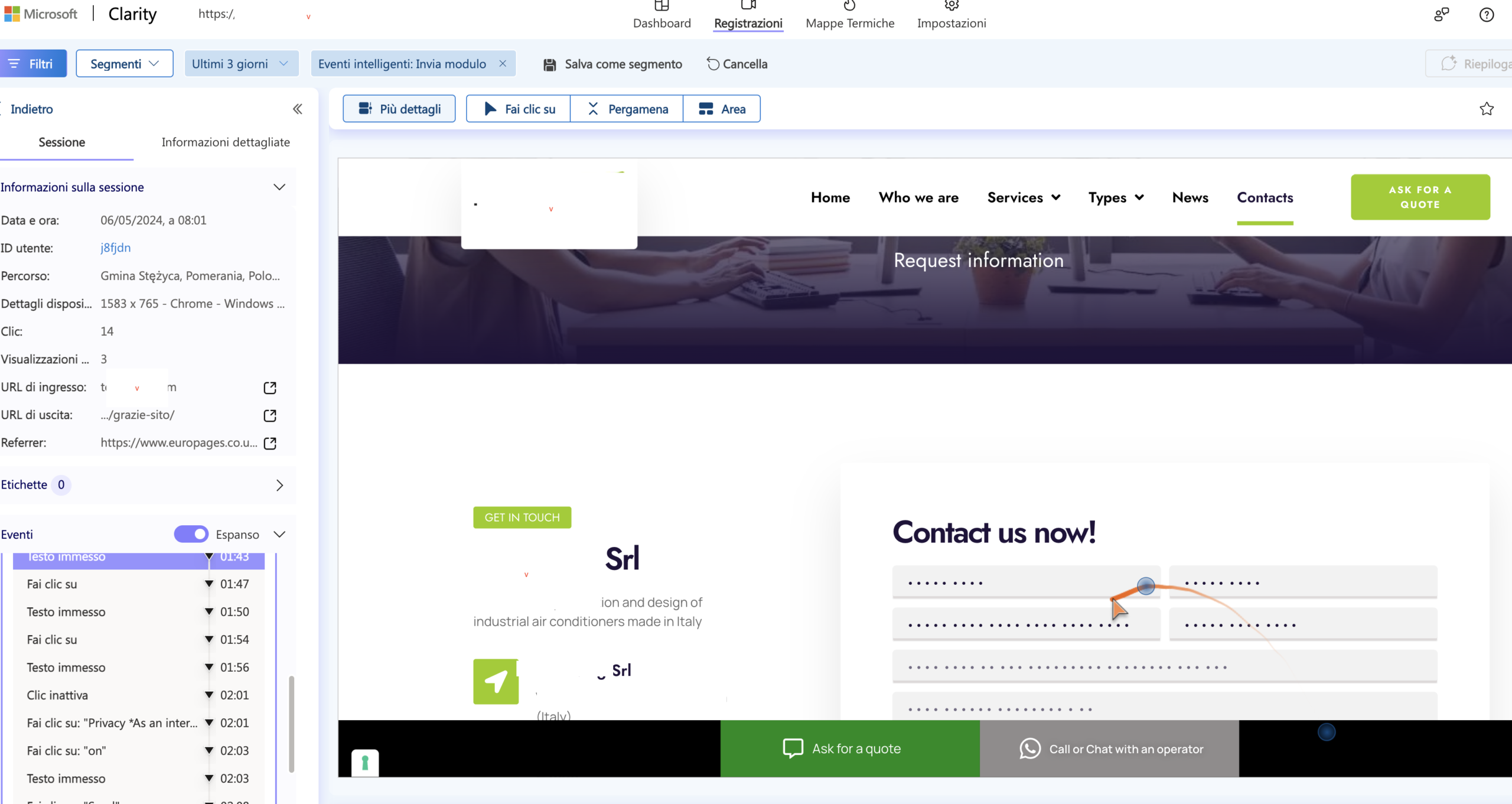
Heatmaps and Recordings
Analyzing heatmaps, meaning where users’ attention lingers most on the site, and session recordings, which show how users navigate the site, which sections they focus on, how they scroll, where they click and how quickly, is essential to discover their browsing process and improve the user experience. There are two tools I recommend because I use them every day: Clarity by Microsoft and Hotjar.
2. SEO Content Strategy
Always remember that when you write, you’re addressing real people. But these people look for answers to their questions and doubts online, so your content must be easy to find on Google, right when the user types certain keywords. To create your SEO Content Strategy, you need to analyze the search intents, using dedicated tools such as:
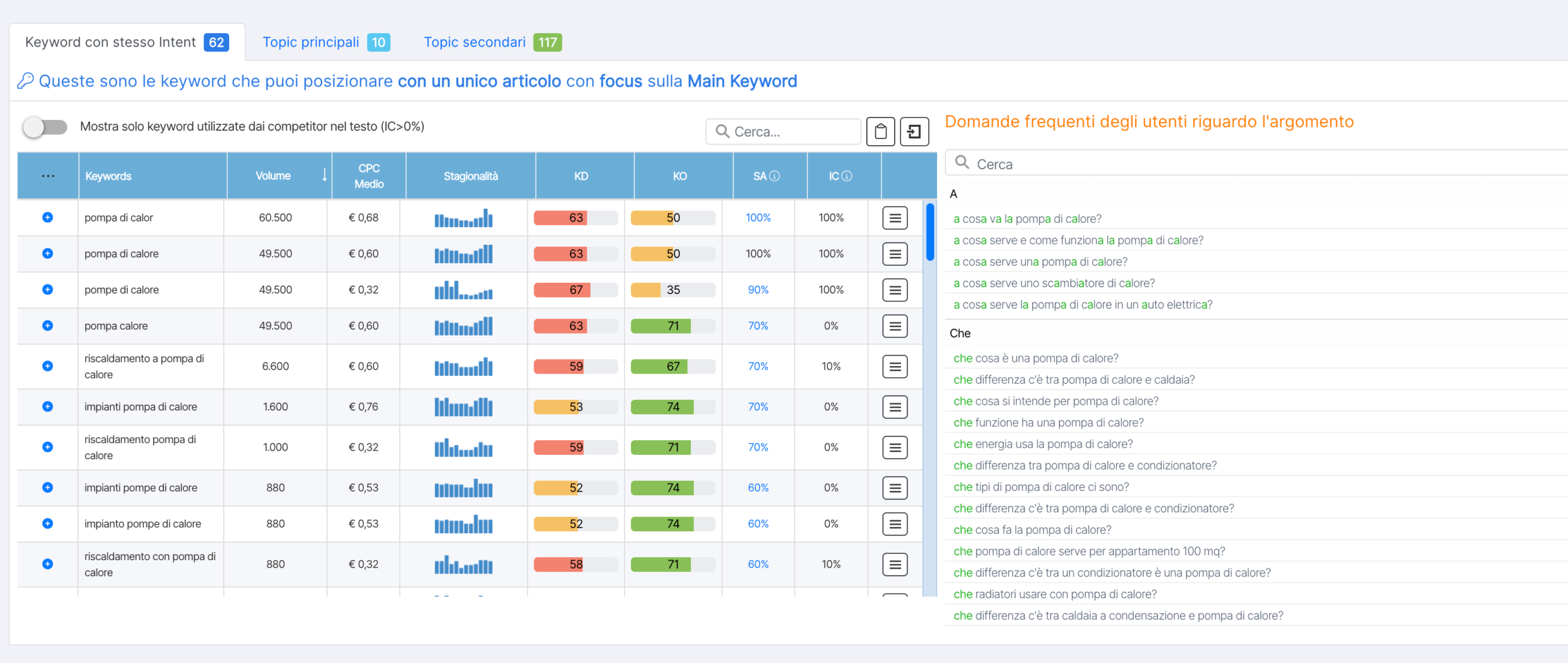
- AnswerThePublic
- Ubersuggest
- Keywords People Use
- Sparktoro
- Google’s People Also Ask
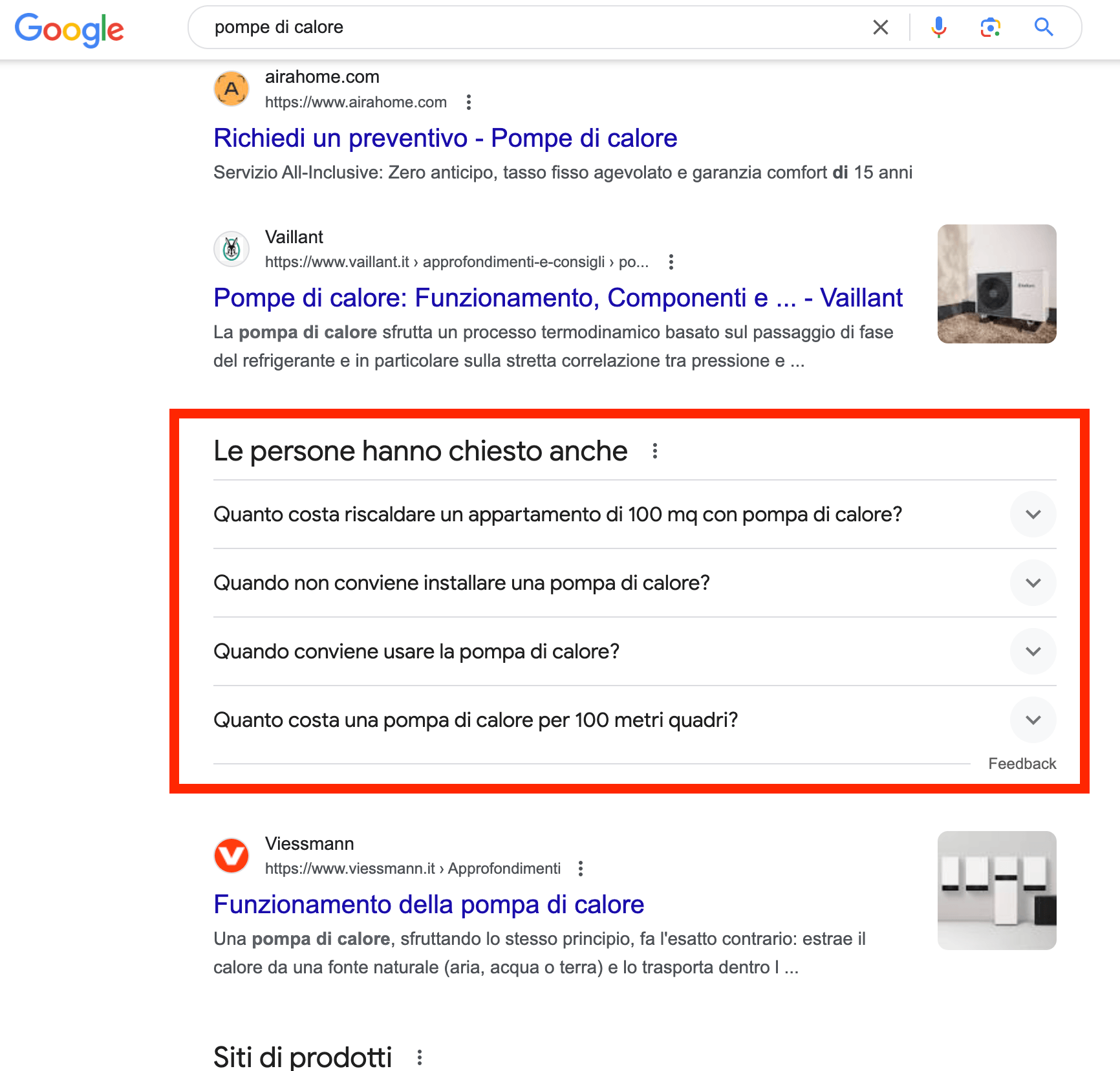
Don’t forget to search on:
- Amazon
- YouTube
On these last three channels you can see which keywords users use to talk about a certain topic. Don’t stop at analyzing search intents; also look at related searches and questions: from here you can easily pick up ideas for your articles and for drafting the editorial plan.
Note: the insights you find will be useful not only for the blog but also for all the other marketing & communication channels you use, from social media to the newsletter.
3. Editorial Plan
Now you can create your editorial plan: a list of all the articles you’ll publish on your blog. I prefer using an Excel file, but you can also use tools like Trello and Asana. I recommend including:
- publication date, or at least week/month
- article title
- topic/notes/descriptions
- associated keywords/search intents
- anything else (for example other well-made similar articles that could inspire you)
4. Title
There’s no doubt the title (H1) must grab attention: it’s from the title, in fact, that users understand whether the article is what they need. Some practical tips for creating catchy titles, SEO-wise too:
- Write the title as a solution to a problem.
Let’s take the B2B heat pump company again. An H1 could be: “Industrial Climate Control: How to Save Over 3,500 TOE in Your Warehouse.”
- Put the main keyword at the beginning of the title.
- Be concise and get straight to the point. The title must grab attention; the body will go into explanatory detail.
- When possible, include numbers, which convey concreteness and authority.
For example: “Industrial Climate Control: 5 Ways to Increase Your Workers’ Productivity.”
- Turn the title into a question.
- Use power words, which encourage action, such as “useful,” “exclusive,” “free.”
“A Useful Guide to Industrial Climate Control: 10 Benefits for Your Company.”
- If you’re short on ideas, tryCoSchedule’s Headline Analyzer
5. Web Copywriting
Knowing that reading online is harder than reading offline, you need to write content that’s easy and quick to read. So:
- choose short sentences
- avoid subordinate clauses
- use bulleted lists and numbered lists to list important concepts
- highlight important words in bold
- get straight to the point, adding details and in-depth content not in parentheses but as external links
- pay attention to grammar, to punctuation and syntax . For example: follow consistent capitalization rules for headings and proper names; after commas, semicolons, periods, exclamation and question marks, leave a space before the next word; an ellipsis always has exactly three dots. 6. Links
7. SEO
Search intents
The first key SEO element is definitely studying search intent.
Google analyzes User Intent, users’ search intention, dividing keywords into 5 broad macro-categories, or clusters:
- Informational – the user wants more information on a certain topic:
- Navigational – the user already knows what they’re looking for and just wants to reach the site that covers that specific topic:
- Transactional – the user is already informed and wants that specific product:
- Local – the user is looking for a product, a store or a service in a specific location:
- Commercial – the user is looking for specific information about a particular product or service, such as reviews or comparison tables:
SEO Title and Description
Besides optimizing the formatting of paragraphs and headings, remember to write the SEO title and meta description: in the SEO title, it’s best to start with the keyword you want to rank for.
As for the title meta tag, remember that:
- every page must have one unique!
- it must reflect the page’s topic;
- it mustn’t raise the spider’s suspicions (too many keywords: keyword stuffing);
What should a good SEO title look like?
- Short enough not to be “truncated” in the SERPs of the main search engines.
- It’s advisable to place keywords as close as possible to the beginning of the title.
- If you include a “brand” in the title tag, put it at the end of the title, unless it’s a well-known brand people search for.
- Avoid a title stuffed with meaningless keywords.
Links
Finally, links are essential:
- link to internal pages of your site
- link to external pages for further reading
- try to earn backlinks, meaning external links to your site (in this case you’ll need to work on Link Building)
Short URLs are easier for users to remember and recognize.
- A hierarchical URL, organized in logical folders, lets users and search engines understand which section the page belongs to, and therefore helps give it a theme.
- Use Screaming Frog to check that there are no URLs with non-ASCII characters, such as symbols and accented letters, which shouldn’t be used.
- Avoid capital letters where possible, as they could create duplicates of the lowercase version of the URL.
- Watch out for duplicate URLs (the same content on different URLs) and overly long ones
8. Visuals
Some tips for optimizing images:
- Rename images with a consistent name (1234.jpg isn’t good; built-in-dishwasher.jpg is a suitable image name), removing spaces and using “-” or “_” to separate words.
- Compress images when publishing them (they should usually be under 100 KB).
- Resize images if they’re larger than the size displayed on the web page.
It’s always good to include visual content, an image or video, in your article to support the copy and give users more complete information.
9. CTAs
Working on content for lead generation, every day I write articles and content with precise CTAs. Blog articles too. Think of your article as a kind of business card, where you present your company’s advantages, your expertise and your knowledge of a certain industry, and therefore the sale. You could use different CTAs in your blog posts, such as:
- visits to a specific page of the site
- sign-ups to the newsletter
- sign-ups to a webinar
- download of content (PDF, ebook, checklist)
- follow a social channel
- request for a quote
10. Analytics
You absolutely must analyze your articles’ data and performance to understand whether you’re achieving your marketing and communication goals. When I work on company projects, I always prefer to consider both SEO analytics and broader marketing analytics, tied to branding, lead generation and demand generation.
SEO data
You get it from the suite you use, such as SEOZoom:
- ranking keywords
- article performance in the SERP
- backlinks
- positions gained by the article on Google
- ranking improvements in the SERP
Broad marketing and communication data
You get it from Google Analytics:
- increase in blog sessions
- average time spent on articles
- bounce rate (a good bounce rate is 60% or lower)
- exit pages
Cross-referencing all this data will let you make data-driven strategic decisions (not based on feelings, “I think it’s done this way” or “we’ve always done it this way”).
SEO copywriting
Online you often find the term “SEO copywriting”, but it’s simply the art of writing online to rank at the top of Google, and therefore be found by your target audience.
When we write, we must first consider the user’s needs and expectations, without forgetting SEO. We need to understand what we want to achieve with that specific keyword combined with the user’s intent.
Ask yourself:
- How might the user search for a topic?
- What is the user looking for?
- What do they expect to find?
- What device are they searching from?
- Do they use voice search?
Online you often find the term “SEO Copywriting,” but it’s simply the art of writing online to rank at the top of Google, and therefore be found by your target audience. I always like to say that everything is SEO copywriting. It goes hand in hand with Persuasive Copywriting, used mainly for lead generation: think of CTA microcopy or specific copy for sales pages or ads.
SEO Copywriting Course
If you’re looking for a good SEO copywriting course, and content & copywriting focused on lead generation, I’m working on my online course, POPcontent. If you want to know when it opens and you can buy it, join the waiting list here.
The modules, full of case studies and practical examples, will focus on
- Content Strategy
- Artificial Intelligence
- Conversion Copywriting
- SEO Content
- Blog content
- E-commerce content
- Social media content
- Email marketing content
- Content for lead generation
- Personal branding content
- Digital PR
- Analytics
- Tool
Artificial Intelligence for writing copy
Let’s clear one thing up right away: ChatGPT isn’t the only option!
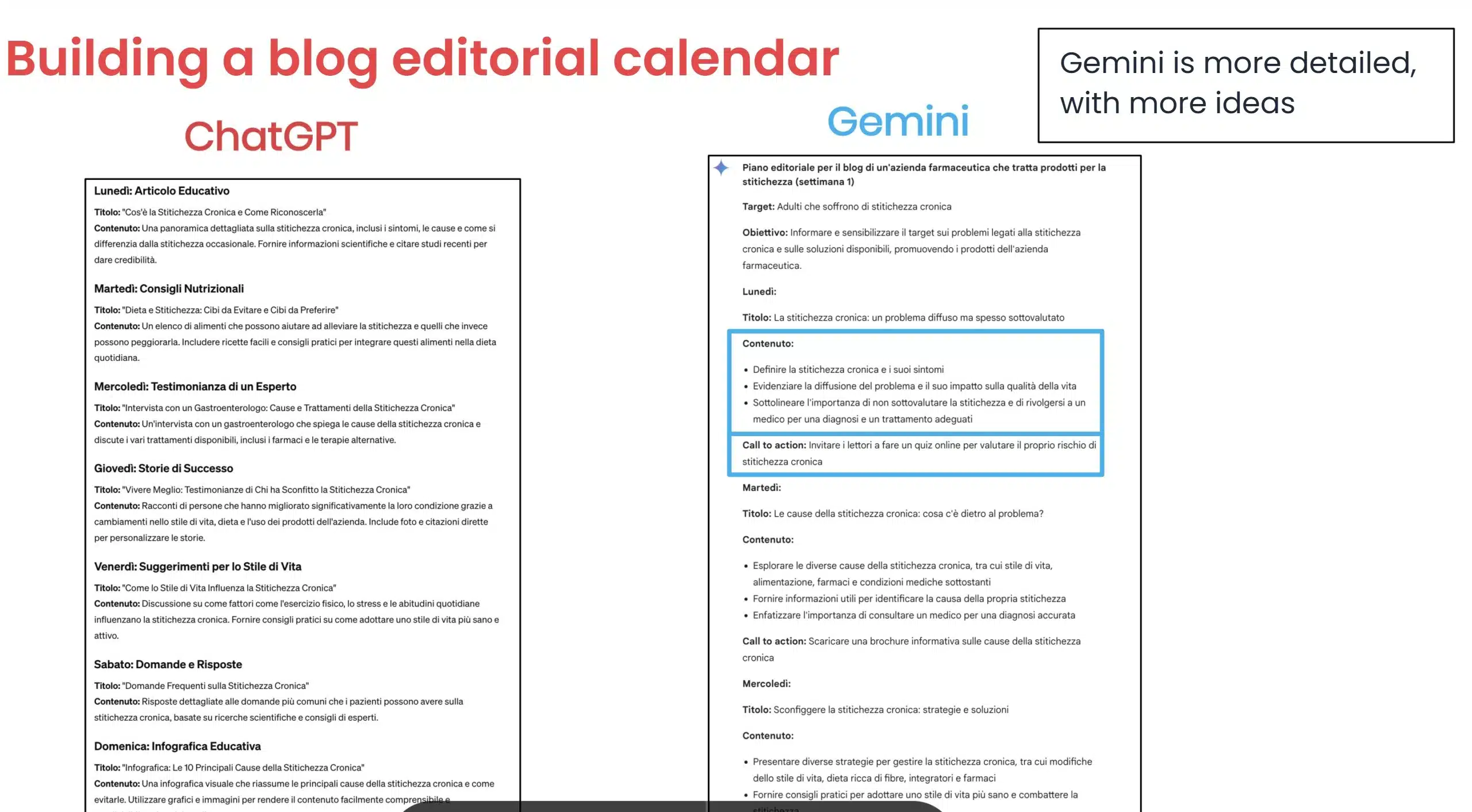
I, for example, also get on very well with Gemini from Google. My advice is to test both platforms, feeding them the same prompts and analyzing the different results, then take inspiration and create your article. You read that right: take inspiration. Don’t copy and paste the AI’s output, but use your brain, your expertise and your field experience to get help from these tools, while YOU create the content from scratch.
ChatGPT prompts
It all comes down to knowing how to write the right prompt.
There’s no secret formula, but after months of practice on projects, here’s a flow that I think works well:
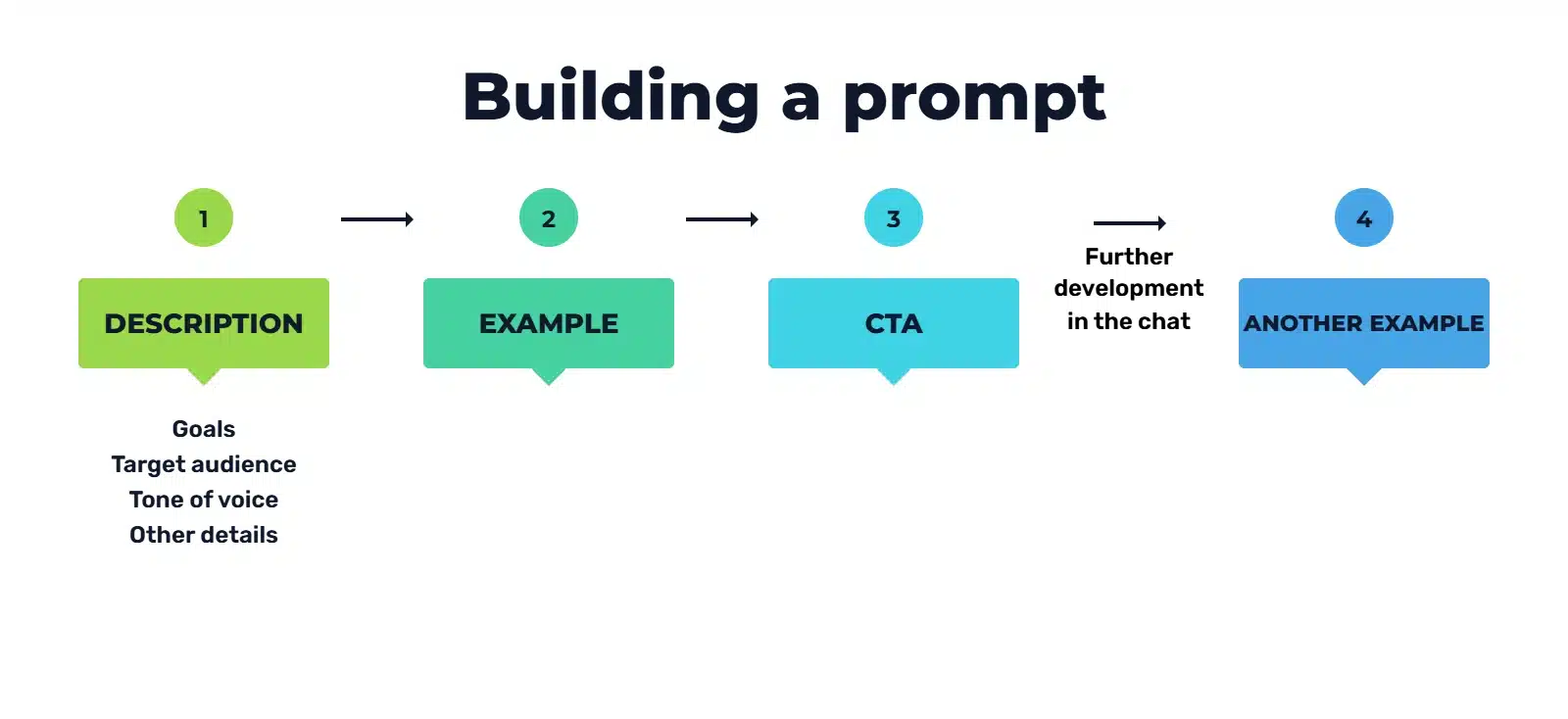
- Write a detailed prompt, specifying your goals, your target audience and, if relevant, the tone of voice.
- Then add an example (link) of content you think is well made
- Add the CTA (for example: write an article)
- if you’re not satisfied with the result, give the platform another useful example
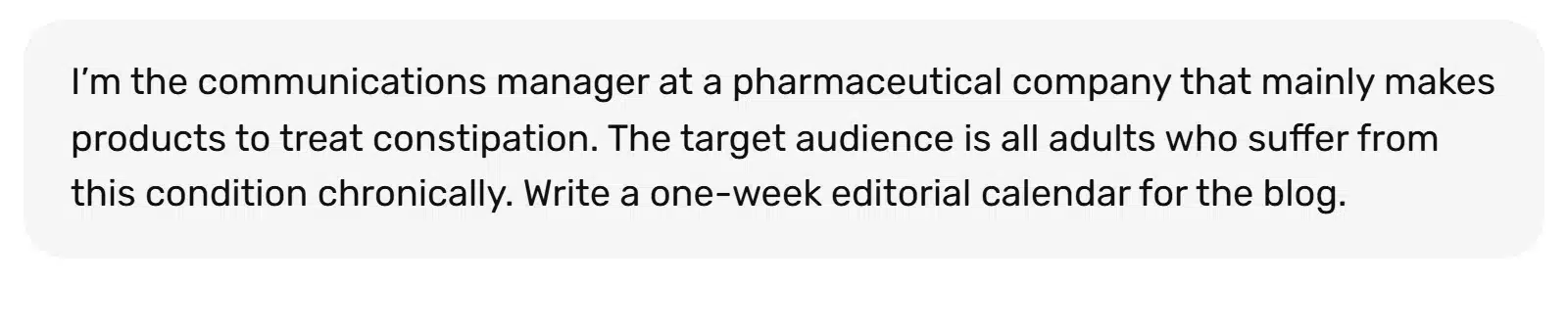
Here’s an example of this prompting process:

Writing the blog editorial plan: prompt example
Result: ChatGPT vs Gemini compared
Remember that Artificial Intelligence:
- is a tool
- we have to be the ones in control
- saves time
- can NOT replace our human brain
- needs to be used skillfully
- has a margin of error
Writing a blog article: useful tools
Here’s a checklist of essential tools for writing blog articles:
Writing and Editing
- Word
- Drive
- Grammarly
- CoSchedule Headline Analyzer
-
Portent’s Content Idea Generator
-
HubSpot’s Blog Ideas Generator
- ChatGPT
- Gemini
SEO
- SEOZoom
- AnswerThePublic
- Google’s People Also Ask
- Ubersuggest
Organization
- Trello
- Asana
Visuals
- Leonardo.io
- Canva
- TinyPNG
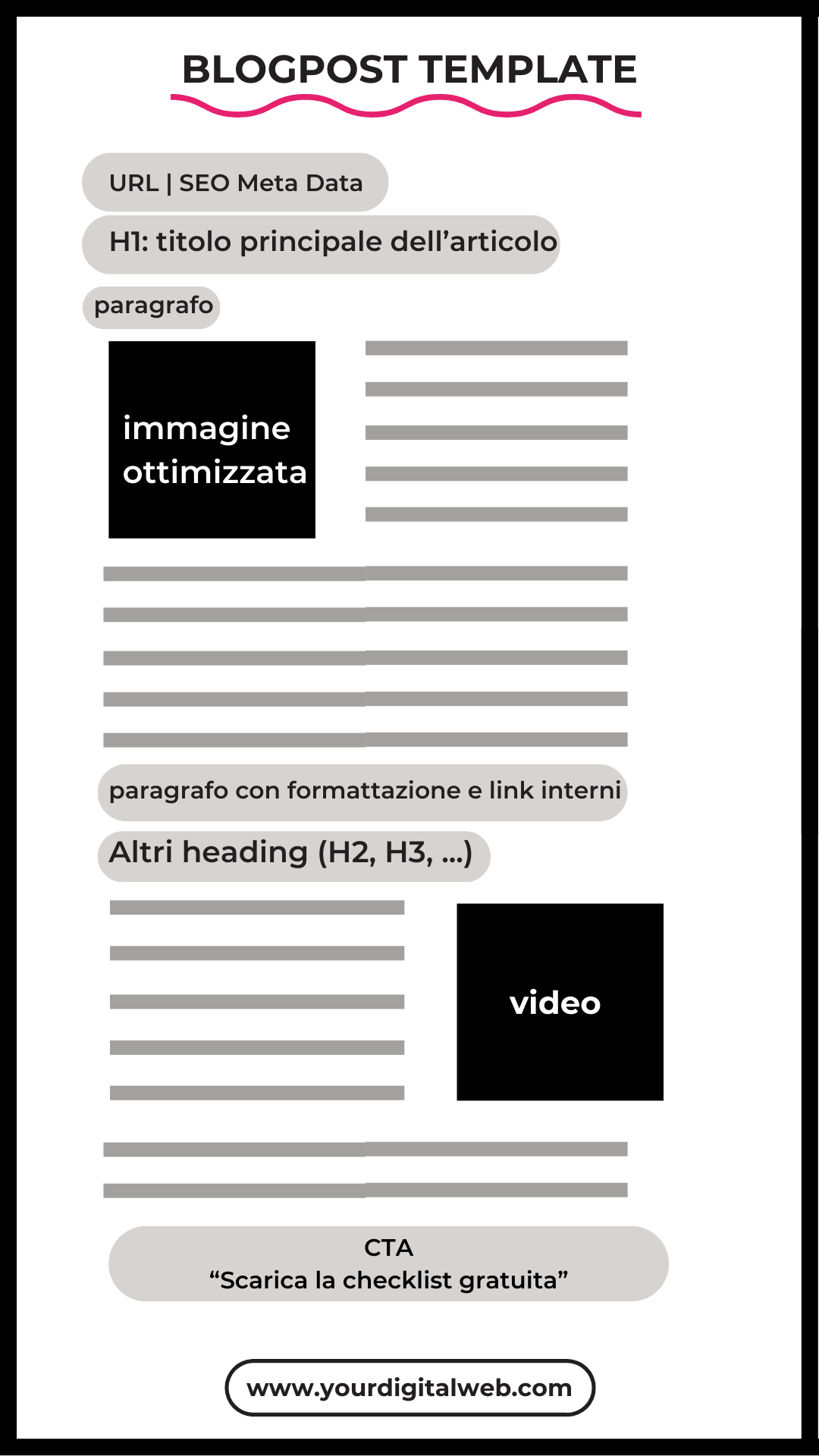
Anatomy of a blog article: template
Download and share this template: a reminder to always keep at hand!

Roberto Rais
Esperto Wikipedia e GEO
On the YourDigitalWeb team, works on Wikipedia and Generative Engine Optimization projects, helping companies and professionals build an authoritative, verifiable presence that search engines and AI recognize and cite.
One click and, when you search for SEO, AI and marketing, our articles will show up more often in Google’s Top Stories.