Table of contents 4 sections
I synthetic datai (o Synthetic data) is artificially generated data that replicates the characteristics and properties of real data. It’s created using advanced algorithms and computational simulations, leveraging technologies such as generative AI and machine learning. Unlike real data, synthetic data doesn’t contain direct observations of specific individuals or events, ensuring greater privacy protection. It’s a particularly useful solution where data availability is limited or strict data protection rules must be followed. Synthetic data can be used in many applications, including training machine learningmodels, software development, scientific research and testing IT systems, offering a safe, flexible alternative to real data.
How Does Synthetic Data Work?
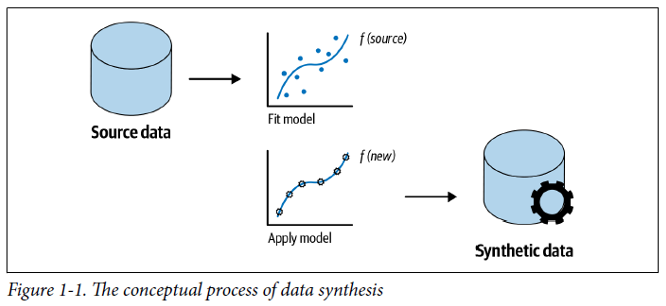
Creating synthetic data involves several main methods, including:
- Statistical Distribution: this method analyzes real data to identify its statistical properties, such as distributions and patterns. Synthetic Synthetic datadata is then generated to mirror these properties, ensuring statistical similarity with the original data.
- Model-Based Generation: machine learning models are trained on real data to learn its characteristics. These models can then generate synthetic data that keeps the same statistical properties as the real data.
- Deep Learning Techniques: advanced techniques such as generative adversarial networks (GAN) and variational autoencoders (VAE) are used to create complex synthetic data, including images and time-series data. These methods are especially useful for creating high-quality synthetic datasets for sophisticated applications.
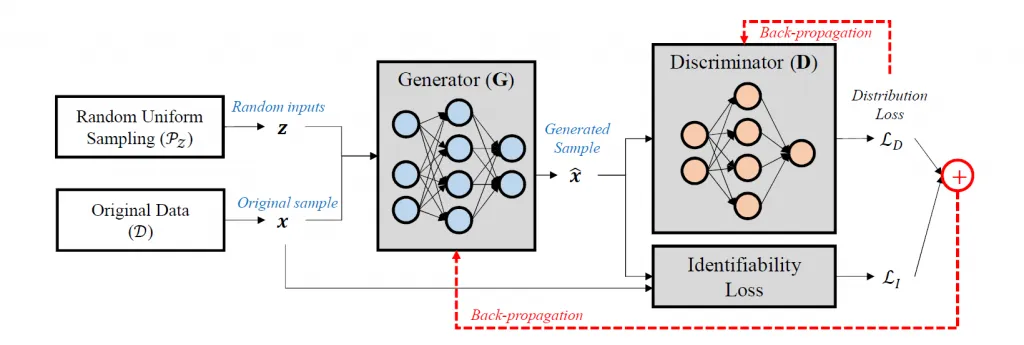
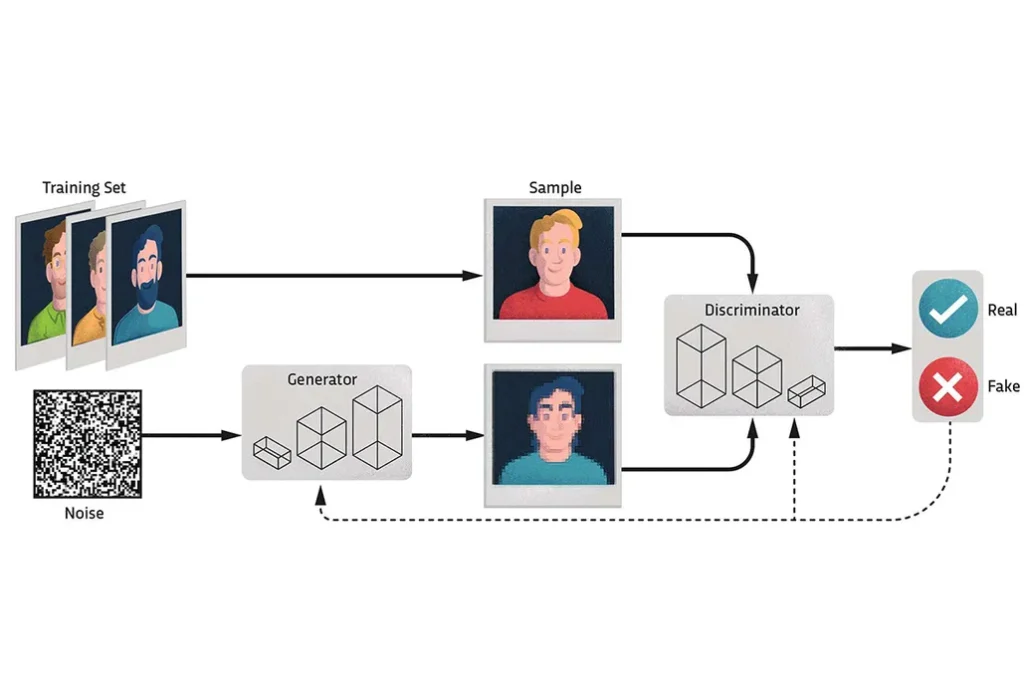
- The process of generating synthetic data, also called synthesis, can be carried out with various techniques, such as decision trees and deep learningalgorithms. Synthetic data can be classified by the type of original data: the first type uses real datasets, the second uses knowledge acquired by analysts, and the third combines both. Generative Adversarial Networks (GANs) are one of the most advanced deep learning technologies, used mainly to generate synthetic images. GANs consist of two neural networks that train each other: the generator network creates synthetic images and the discriminator network tries to tell real images from synthetic ones. This iterative process continuously improves the quality of the generated images. Besides GANs, another powerful technique for generating synthetic data is Variational Autoencoders (VAEs). VAEs are probabilistic generative models that learn a compact representation of the input data. Unlike GANs, which use a competitive approach, VAEs are based on a combination of autoencoders and variational inference techniques. VAEs map input data into a lower-dimensional latent space and then sample from this space to generate new data. This approach gives better control over the variability of the generated synthetic data and ensures it follows the distribution of the original data. Both techniques, GANs and VAEs, have significant applications in various fields. For example, in healthcare they can be used to create synthetic datasets that respect patient privacy, while in finance they help generate data for modeling and analysis when real data is scarce or incomplete. These techniques are also used to train machine learning models, in software development and in scientific research, offering flexible, safe solutions for many data needs
Applications of Synthetic Data
Synthetic data has a wide range of applications across industries:
Healthcare: it can be used to create realistic medical records for research and training without compromising patient privacy. It lets researchers work with data that keeps the statistical properties of real patient data without exposing personal information.
Finance: financial institutions use synthetic data to develop and test algorithms for fraud detection, risk management and trading strategies. This data helps comply with privacy rules while creating robust test environments.
Automotive: in autonomous vehicle development, Synthetic data is used to simulate driving scenarios. This helps train algorithms to recognize and respond to various driving conditions, improving the safety and reliability of self-driving cars.
Retail: retailers use synthetic data to simulate customer behavior and optimize inventory management, pricing strategies and marketing campaigns. This helps improve operational efficiency and customer satisfaction.
Machine Learning and AI: I Synthetic data is essential for training and validating machine learning models, especially when real data is scarce or sensitive. It enables the creation of large labeled datasets that improve the performance of AI systems.
Why Synthetic Data Matters
The importance of synthetic data lies in its ability to address several critical challenges:
-
- Privacy and Compliance: synthetic data offers a way to share and use data without violating privacy rules. It helps organizations comply with data protection laws while continuing to analyze and use data effectively.
- Data Availability: in many cases, real data can be scarce or hard to obtain. Generating synthetic data makes it possible to create large datasets, facilitating research and development in many fields.
- Bias Reduction: synthetic data can help mitigate biases present in real-world data. By generating balanced datasets, it’s possible to create fairer, less biased machine learning models.
- Cost Efficiency: collecting and labeling real data can be expensive and time-consuming. Generating synthetic data is often cheaper and faster, providing a valid alternative for data-driven projects.
How to manage synthetic data in a business setting?
Despite the benefits, generating synthetic data also presents several challenges and pitfalls:
- Quality Control: ensuring the quality and accuracy of synthetic data is crucial. Poorly generated data can lead to wrong conclusions and flawed models. Rigorous validation processes are needed to keep data quality high.
- Technical Complexity: generating synthetic data requires advanced technical skills. Developing effective algorithms and models for data generation is a complex task requiring in-depth knowledge of statistics, machine learning and data science.
- Stakeholder Acceptance: convincing stakeholders of the value and reliability of synthetic data can be difficult. Clear communication and demonstrating the benefits are essential for wider acceptance.
- Regulatory Considerations: while synthetic data can help with compliance, it also raises new regulatory questions. Ensuring that Synthetic data complies with relevant laws and guidelines is necessary to avoid legal complications.
Advanced Synthetic Data Generation Techniques
Generative Adversarial Networks (GANs) GANs consist of two neural networks competing with each other: a generator that creates synthetic data and a discriminator that tries to distinguish real from synthetic data. This iterative process lets the generator produce highly realistic data, as we’ve already seen.
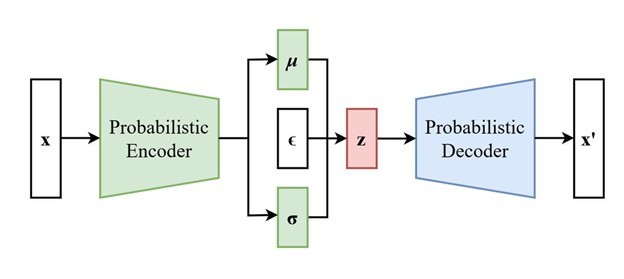
 Variational Autoencoders (VAEs) VAEs use an encoder-decoder structure to generate synthetic data. The encoder transforms real data into a latent representation, while the decoder generates new synthetic data from this representation. This approach is useful for creating realistic variations of the original data.
 Tree-Based Models Tree-based decision models can be used to generate synthetic data that respects the conditional relationships present in real data. These models are especially useful for structured and categorical data.
Industry-Specific Advantages
Healthcare
- Privacy: synthetic data eliminates the risk of exposing sensitive patient data, making data sharing and analysis easier.
- Faster Research: it makes it possible to create large, varied datasets for medical research, speeding up the development of new treatments and technologies.Finance
- Compliance: it helps financial institutions comply with data privacy rules while conducting in-depth analysis.
- Algorithm Development: it makes it possible to test and improve fraud detection and risk management algorithms in a controlled environment.
Automotive
- Security: it makes it possible to simulate driving scenarios to train autonomous vehicles, improving their ability to operate in real conditions.
- Cost Savings: lower costs associated with physical vehicle testing, enabling large-scale virtual simulations.
Retail
- Customer Behavior Analysis: it makes it possible to analyze and predict customers’ buying behavior without violating privacy.
- Inventory Optimization: it makes it easier to simulate different demand and supply scenarios, optimizing inventory management and marketing strategies.
Tools and Technologies for Generating Synthetic Data
Commercial Data Synthesizers
- Several companies offer software specialized in generating synthetic data, such as Synthesized.io, Mostly AI and Hazy.
- These tools provide user-friendly interfaces for creating synthetic data without requiring advanced programming skills.
Open Source Frameworks
- There are also many open-source tools, such as SDV (Synthetic Data Vault), Faker and Synthia, which allow greater customization and control over the data generation process.
- These frameworks are ideal for developers and data scientists who want to integrate synthetic data solutions into their existing workflows.
The Future of Synthetic Data
Growing Adoption
- With growing privacy concerns and increasingly complex data protection regulations, the adoption of synthetic data is set to grow.
- The tech industry is investing heavily in developing ever more sophisticated algorithms for generating synthetic data, increasing its quality and reliability.
Integration with AI and Machine Learning
- The synergy between synthetic data and artificial intelligence opens new frontiers in research and development. For example, synthetic data can significantly improve the training processes of machine learning models.
- Using synthetic data helps address data imbalance problems, making models more robust and accurate.
Collaboration and Data Sharing
- Generating synthetic data makes collaboration between companies and research institutes easier, allowing synthetic datasets to be shared without compromising privacy.
- This could lead to faster progress in scientific research and technological development, especially in sectors such as healthcare and automotive.

Davide Prevosto
Senior Developer and Technical Consultant
Senior developer and technical consultant at YourDigitalWeb, he handles the technical side of SEO and GEO projects. He co-authored the book “Generative SEO” (Edizioni LSWR) with Marco Maltraversi and Giovanni Sacheli.
One click and, when you search for SEO, AI and marketing, our articles will show up more often in Google’s Top Stories.