Table of contents 5 sections
Search engines are going through a historic change thanks to the integration of artificial intelligence (AI). New tools such as Google’s Gemini and OpenAI’s ChatGPT Search are redefining how we access information, laying the foundations for a new generation of more contextual, conversational online search.
Artificial Intelligence (AI) has gone from a futuristic concept to a concrete reality that is redefining how companies interact with consumers. Thanks to its ability to analyze data at scale, automate processes and deliver personalized experiences, AI is one of the most significant innovations of the 21st century. How can we take advantage of this historic change in the way we do advertising, digital marketing and SEO? Discover our AI Consulting services
What Is Artificial Intelligence Applied to Marketing?
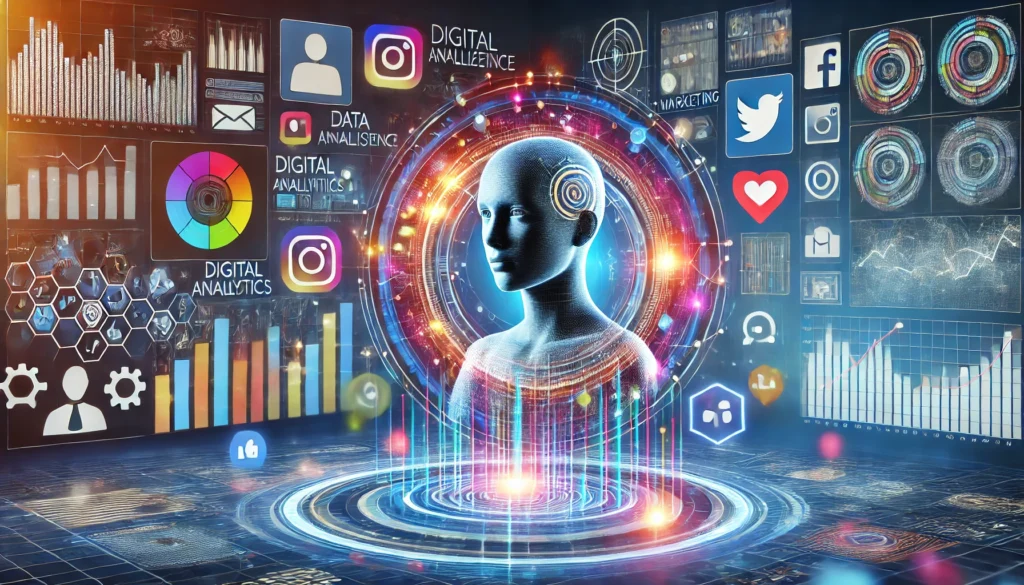
AI in marketing means using advanced technologies such as machine learning (Machine Learning – ML), natural language processing (Natural Language Processing – NLP) and predictive analytics to optimize strategies, campaigns and customer interactions. These technologies let marketers gather more precise insights and act proactively rather than reactively. In practice, AI can:
- Analyze huge amounts of data in real time.
- Identify consumer behavior patterns.
- Automate complex processes, such as audience segmentation or content creation.
These are just a few of the “functions” AI can perform in marketing.
Some Possible Applications of AI in Marketing
AI is present in every aspect of modern marketing, from simple automations to sophisticated market analysis. Here are some possible applications:
1. Predictive Analytics
With AI, companies can analyze historical data to predict consumers’ future behavior. Predictive analytics helps identify emerging trends and plan targeted strategies.
- Practical example: an online retailer can predict which products will be most in demand in a given season, optimizing inventory and promotional campaigns.
2. Real-Time Personalization
AI makes it possible to offer highly personalized experiences, adapting content, offers and messages to users’ preferences and behavior.
- Practical example: streaming platforms like Netflix use AI algorithms to recommend personalized movies and TV shows based on viewing habits.
3. Marketing Automation
AI-powered marketing automation handles repetitive tasks such as sending emails, managing social media and updating databases.
- Key tools: software like HubSpot and Marketo uses AI to create smart workflows that respond automatically to customers’ actions.
4. Chatbots and Virtual Assistants
AI-based chatbots offer 24/7 assistance, quickly answering frequently asked questions and guiding customers through the buying process.
- Practical example: chatbots from companies like H&M provide personalized style suggestions, increasing engagement and improving conversion.
5. Content Generation
Advanced tools like ChatGPT can generate quality content, cutting production time and providing innovative ideas for campaigns.
- Practical example: blogs, product descriptions and even creative scenarios for ads can be created with AI support. [Of course, in our view AI is a tool that must be guided by people to achieve tangible results]
Strategic Advantages of Artificial Intelligence
Adopting AI offers many advantages, many of which are now essential to stay competitive:
- Operational Efficiency: by automating complex tasks, AI lets companies save time and resources.
- Greater Precision: algorithms can analyze billions of data points with a level of precision impossible for humans.
- Data-Driven Decision-Making: thanks to the insights AI provides, marketers can make more informed, strategic decisions.
- Improved Customer Experience (CX): real-time personalization and assistance increase satisfaction and loyalty.
How to approach using AI correctly?
Despite its many advantages, adopting AI in marketing isn’t without difficulties. The main “challenges” include:
1. Technological Complexity
Integrating AI with existing systems can require significant investments of time and resources.
2. Data Privacy and Security
With more personal data being collected, companies must ensure compliance with regulations like the GDPR and protect information security.
3. Staff Training
Using AI effectively requires specific technical skills, which often need to be acquired through dedicated training courses.
The Future of AI-Driven Marketing
Artificial Intelligence is set to evolve further, introducing new technologies and possibilities. Some emerging trends include:
1. Conversational Marketing
Chatbots and virtual assistants will become increasingly sophisticated, providing human-like interactions. This will improve engagement and increase conversion.
2. Emotion Analysis
AI will be able to analyze consumers’ emotions through facial recognition and language analysis, providing deep insights into audience preferences.
3. Creative Content Generation
Creative AI tools will keep improving, enabling the creation of original videos, images and copy at scale.
4. Omnichannel Integration
Companies will be able to use AI to create consistent experiences across all channels, from online to the physical store.
Gemini: The Evolution of Google’s AI Search
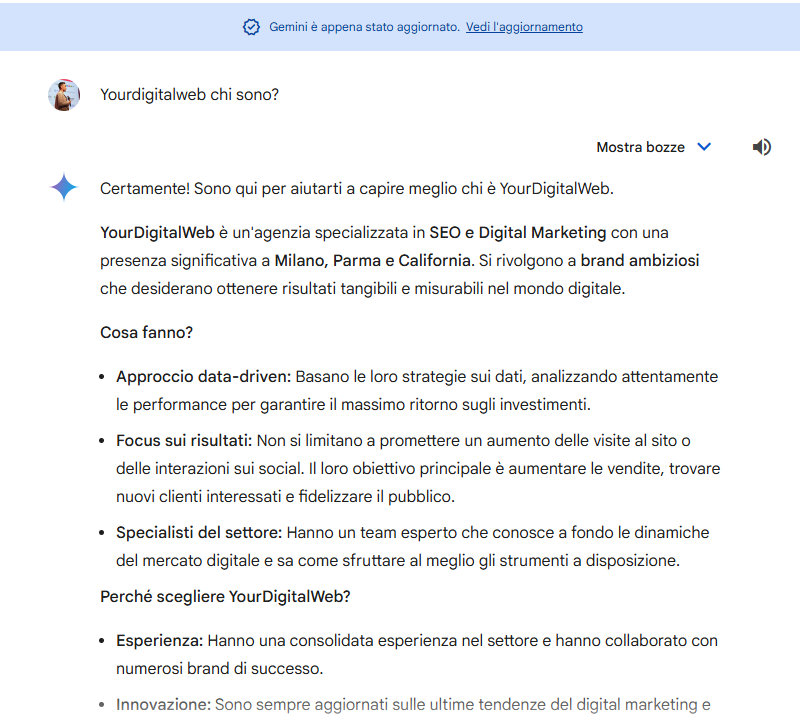
Gemini is Google’s latest innovation in artificial intelligence, designed to combine advanced search features with extremely natural conversational abilities. The model is an evolutionary leap compared with traditional search engines, thanks to its ability to deeply understand users’ intentions and provide more contextual, relevant answers.
Gemini’s main features:
- Detailed, Contextual Answers: Gemini doesn’t just list links: it produces detailed answers that fully address the user’s questions, also drawing on the context of previous interactions.
- Query Personalization: By analyzing users’ behavior and preferences, Gemini contextualizes queries to answer in an increasingly personalized way.
- Native Integration with Google Tools: Gemini integrates seamlessly with applications like Google Workspace, increasing work efficiency through quick, contextual answers.
Implications for marketing: With Gemini, new opportunities emerge for SEO campaigns and voice search. Its ability to precisely understand user intent makes it possible to optimize content so AI can more easily identify and value it, improving marketing strategies.
ChatGPT Search: OpenAI’s Conversational Search
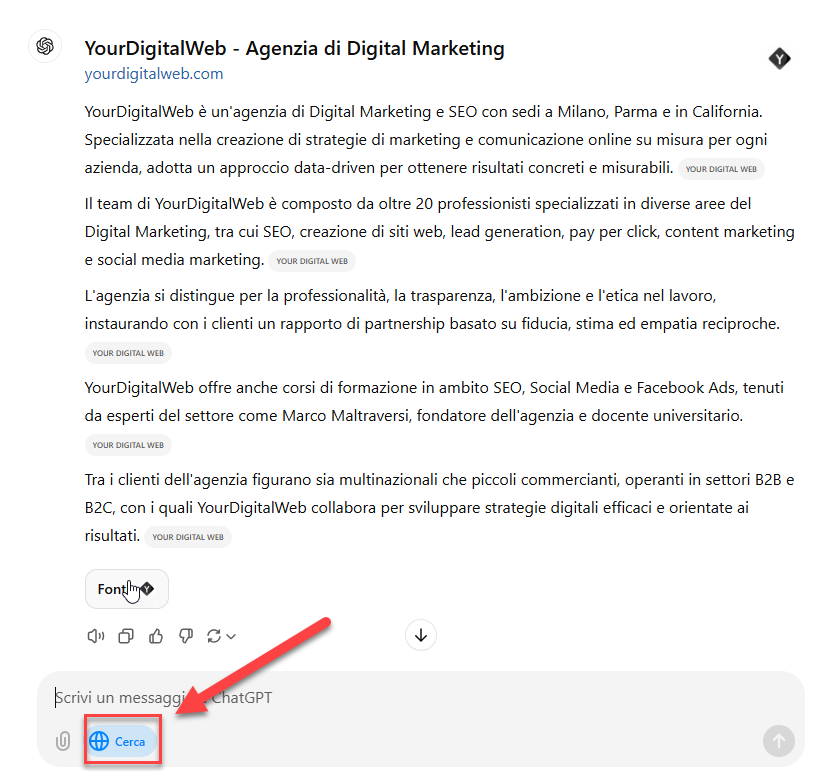
ChatGPT Search, developed by OpenAI, takes a radically different approach from traditional search engines. Instead of just providing lists of links, it offers in-depth, personalized explanations, guiding users toward the best solution for their needs.
Key benefits of ChatGPT Search:
- Personalized Answers: Unlike traditional search engines, ChatGPT Search can understand context and provide answers that take the user’s specific needs into account, making search more human and conversational.
- Ongoing Assistance: It’s not just a static search: users can continue the conversation, ask follow-up questions and receive more detailed information.
Impact on marketing: Conversational search opens the door to the concept of conversational SEO. This means optimizing content to answer users’ specific questions is essential. AI integration also enables more targeted, contextual advertising, where ads are built dynamically based on the answers provided.
Other AI-Driven Search Engines: New Paradigms and Opportunities
Besides Gemini and ChatGPT Search, other platforms are experimenting with AI integration to improve the user experience.
- Neeva AI: An ad-free search engine that used artificial intelligence to deliver personalized results with a strong focus on privacy (it shut down its consumer search in 2023).
- Bing AI: With the integration of ChatGPT, Bing introduced a new interactive search mode that combines the power of language models with traditional search.
But they aren’t the only ones: many platforms use or will use AI, so searches and intents will change too, with a significant impact on SEO and beyond. These new search engines not only improve the quality of results, but also offer unprecedented opportunities for marketing and e-commerce.
The Impact of AI on SEO and Native Advertising
The arrival of AI-based search engines has made it necessary to rethink SEO and advertising.
AI-Optimized SEO
- Conversational Content: Optimizing content to answer precise questions is crucial. Long-tail keywords, such as explicit questions (“How does Gemini work?”), are becoming essential to attract qualified traffic. But “content curation” too, knowing how to communicate through text, video and/or graphics, will be the future for capturing different behaviors and user needs.
- Semantic Search: AI understands not only keywords but also the relationships between terms, favoring well-structured content rich in useful, relevant information.
- Snippets and Featured Answers: Optimizing content to win featured snippets is crucial for visibility, since AI-based search engines often highlight these answers.
Native Advertising: Precision Thanks to AI
- Advanced targeting: AI analyzes user behavior and context to personalize ads, making ad messages increasingly relevant and well received.
- Content Recommendations: Tools like Outbrain and Taboola use AI models to suggest targeted content and ads, improving conversions and engagement.
- Automated A/B Testing: AI can run A/B tests autonomously, analyzing results and quickly identifying the best-performing variants.
How AI Boosts SEO and Advertising in E-commerce
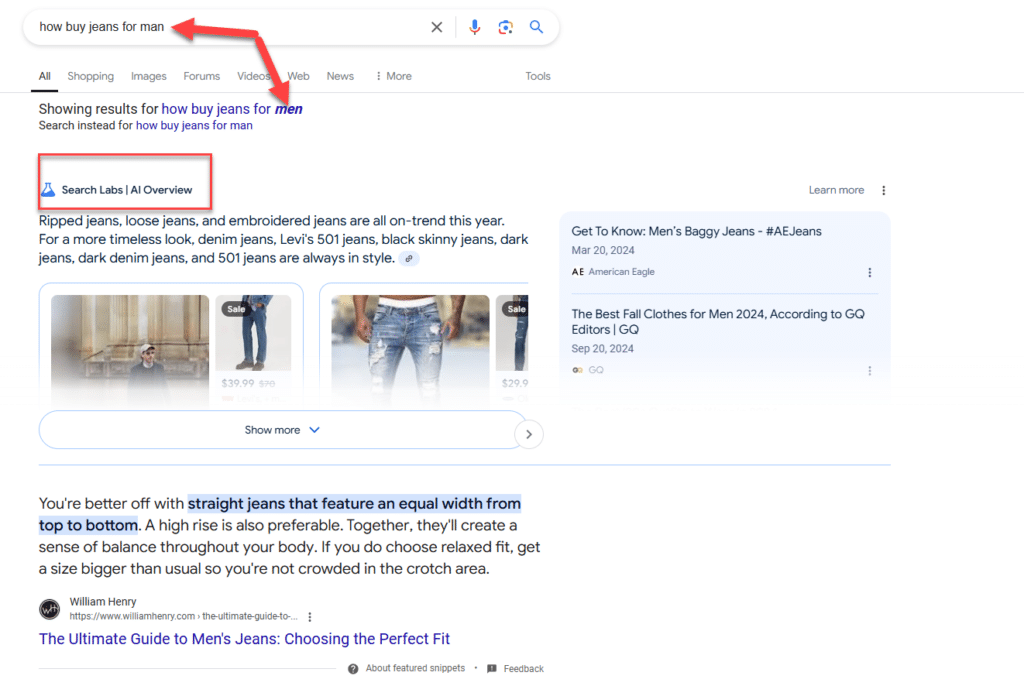
E-commerce is one of the sectors benefiting most from new AI-driven technologies, in both SEO and advertising. The image shows a search on Google Search Labs AI displaying (and refining) results generated from a given search intent.
SEO for E-commerce
- Product Page Optimization: Using semantic analysis algorithms, content can be optimized to attract both traditional and AI-based search engines.
- Voice and Visual Search: Voice and visual search are changing how SEO is done. Optimizing content for voice searches (“Which shoes are good for running?”) or for images is becoming essential.
- Personalized Suggestions in Results: AI-based search engines can suggest products directly in the results, giving brands extra visibility.
Advertising in E-commerce
- Dynamic, Personalized Ads: AI can create dynamic ads that adapt in real time to user preferences, maximizing campaign effectiveness.
- Optimized Customer Journey: Tools like Google Ads use AI to personalize the user journey, guiding people toward completing a purchase more naturally and intuitively.
- Omnichannel Experiences: Synchronizing advertising strategies across channels is another area where AI can make a difference, ensuring consistent, seamless user experiences.
Using AI for Marketing: Advanced Strategies and Techniques
AI for Creating Personalized Content
One of the main advantages of AI in marketing is the ability to create highly personalized content. Using tools like GPT-3, marketers can generate copy for social posts, product descriptions, emails and much more, adapting it to the brand’s tone of voice and the target audience’s needs. AI can suggest topics based on trend analysis and user preferences, ensuring greater relevance and higher engagement.
Chatbots and Automated Responses
Chatbots, such as those based on natural language models, are changing how companies interact with customers. These tools can answer common questions quickly and accurately, improving service quality and reducing wait times. Chatbots are especially useful for customer service, pre-sales assistance and guiding users along the conversion funnel.
Predictive Analytics and Customer Insights
AI tools let companies analyze large volumes of data to identify patterns and forecast future trends. Predictive analytics can be used to optimize marketing campaigns, improve audience segmentation and create personalized messages with a higher chance of success. Knowing customers’ preferences and behavior lets companies anticipate their needs and offer more satisfying experiences.
Dynamic Pricing and Personalized Offers
AI can be used to monitor users’ buying behavior and adjust prices dynamically to maximize profits. Dynamic pricing is particularly common in e-commerce and makes it possible to offer the right price at the right time, taking into account demand, consumer behavior and competition. Personalized offers can also significantly increase conversion rates by showing users the most relevant products based on their preferences.
Ad Campaign Optimization
Artificial intelligence makes it possible to optimize ad campaigns in real time. Machine learning algorithms analyze ad performance and make changes autonomously to improve return on investment (ROI). This process identifies the most effective creatives, the audience segments that respond best and the channels that deliver the best results, improving overall campaign effectiveness.
Customer Journey Personalization
Artificial intelligence makes it possible to personalize every stage of the customer journey. From acquisition to conversion, every interaction can be optimized using behavioral and predictive data. For example, AI can suggest specific content during the consideration stage, or recommend promotional offers during the decision stage to encourage purchase. This personalization not only improves the user experience but also increases the likelihood of conversion.
Visual Marketing and Image Recognition
AI is also having a significant impact on visual marketing. Image recognition technologies let companies analyze visual content posted by users, understand emerging trends and develop campaigns that respond to them. For example, visual social listening platforms such as Clarifai and Google Vision let brands monitor how their products are perceived visually and adapt their strategy accordingly.
Marketing Automation and AI
Marketing automation tools are becoming increasingly powerful thanks to AI. With AI-based automation, marketers can create personalized workflows that adapt automatically to customer behavior. For example, if a user opens an email but doesn’t buy, AI can decide the best next piece of content to send to encourage conversion. This approach reduces the marketing team’s workload and increases campaign effectiveness.
Voice Search Optimization
With the growing spread of voice assistants such as Google Assistant, Amazon Alexa and Apple Siri, voice search is becoming an increasingly important search channel. Optimizing content for voice search means answering users’ questions simply and directly, in natural language. AI can help identify the most common voice queries and optimize content for better rankings in voice results.
Lead Generation and Lead Scoring
Artificial intelligence can be used to improve lead generation and lead scoring. AI can analyze prospects’ data and assess their likelihood of converting, ranking leads by potential value. This lets sales teams focus on the most promising leads, improving efficiency and increasing closing opportunities.
YourDigitalWeb: Experts in AI, SEO and Digital Strategy
For years YourDigitalWeb has been applying artificial intelligence to SEO and digital strategies, helping companies achieve concrete, data-driven results. Thanks to our experience and innovative approach, we help clients make the most of the latest technologies to maximize online visibility and improve marketing campaign performance.

Roberto Rais
Esperto Wikipedia e GEO
On the YourDigitalWeb team, works on Wikipedia and Generative Engine Optimization projects, helping companies and professionals build an authoritative, verifiable presence that search engines and AI recognize and cite.
One click and, when you search for SEO, AI and marketing, our articles will show up more often in Google’s Top Stories.