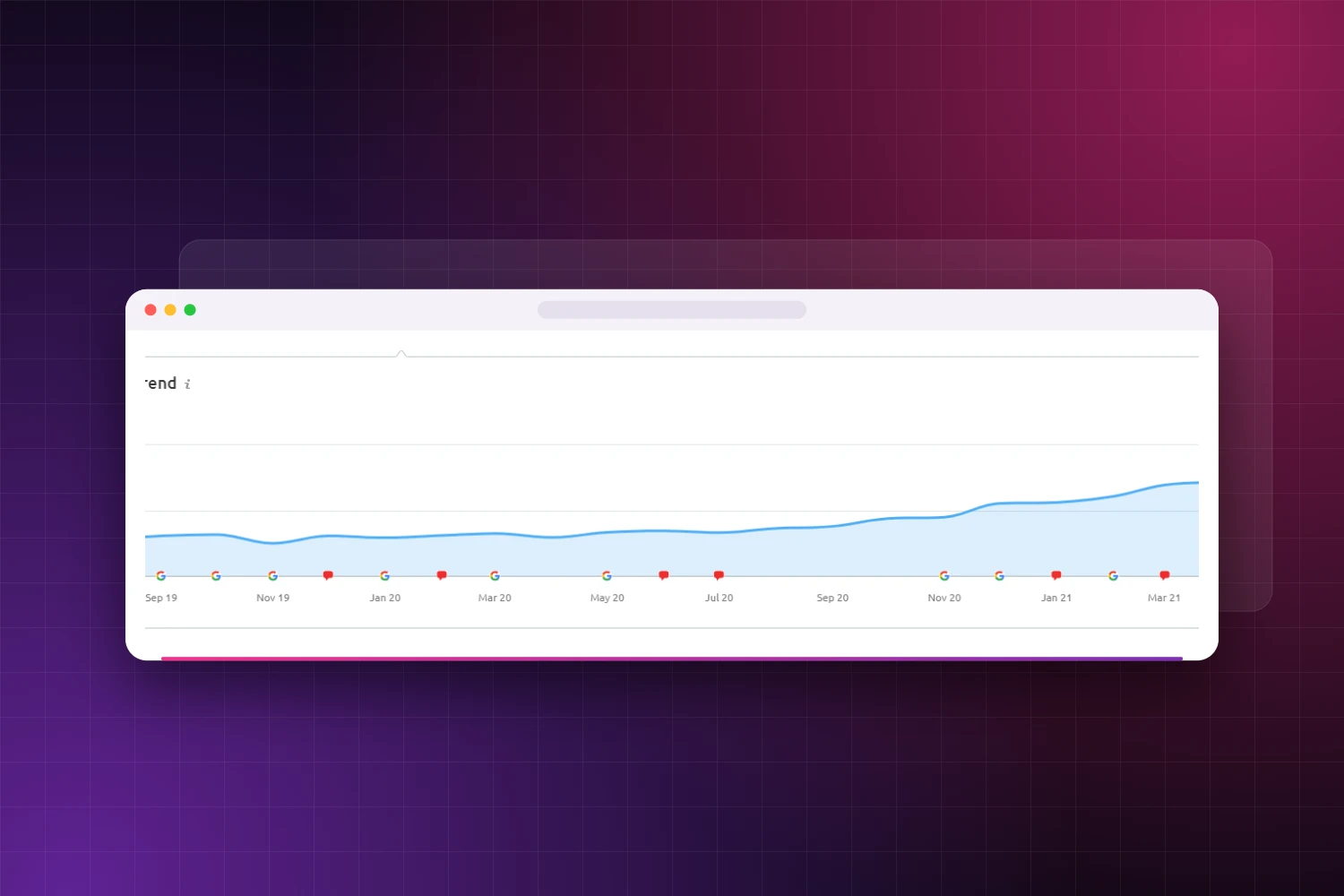
Google penalty recovery: get your website growing again.

Traffic collapsed after a Google update or a manual action? We find the cause, fix the problems and guide the website through recovery, with a clear, verifiable plan.

Organic trafficSearch Console
Drop identifiedFixesRecovery

01Why act now

Every week of decline is lost revenue.

A sudden drop in organic traffic always has a cause: a Google update, a manual action, a technical error or a migration. Finding it fast is the first step to growing again.

  • Manual penaltiesFlagged in Search Console: they must be fixed and explained in a reconsideration request.
  • Algorithmic dropsCore updates and content updates can reduce visibility without warning.
  • Technical causesOften the drop comes from technical errors, migrations or changes to the website.
  • Diagnosis before actionActing without understanding the cause risks making things worse.
SEO optimizationThe effect of the optimizationsGoogle Analytics data
Users+175%
New users+179%
Sessions+167%
Optimization starts ↓
After optimizationBefore

Real data from a YourDigitalWeb client

02What we do

From diagnosis to recovery.

Drop diagnosis

Data analysis to link the drop to updates, changes or technical issues.

Manual actions

Fixing the issues and submitting a reconsideration request to Google.

Content quality

Reviewing weak, duplicate or unhelpful content.

Link cleanup

Analysis and disavow of artificial or toxic links.

Technical fixes

Indexing, redirects, canonicals and issues introduced by website changes.

Monitoring

Tracking traffic and rankings during recovery.

03Why choose us

Fast diagnosis, targeted action.

When traffic collapses you need someone who finds the cause quickly and doesn’t cause damage with random fixes. We’ve recovered websites after Google updates, manual actions and botched migrations.

  • Method described in the book “SEO Audit Avanzato”
  • Analysis of data, content, links and technical SEO
  • Weekly monitoring during recovery
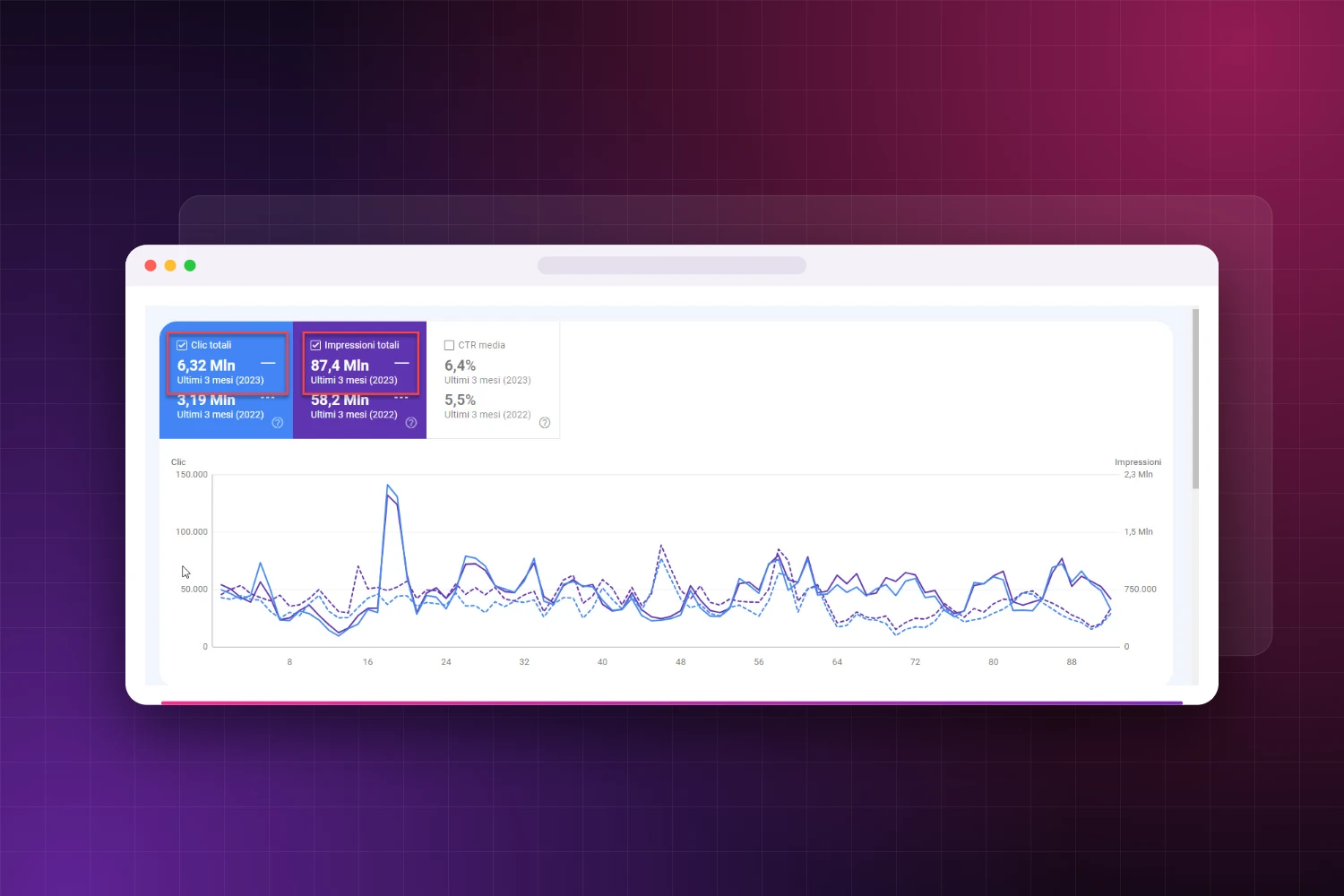
Google News and Discover: over 3 million visits in 9 months
Case studyGoogle News and Discover: over 3 million visits in 9 months+3M visits from Google Discover · +40% organic traffic
→

04How we work

A clear, verifiable recovery path.

  1. DiagnosisWe identify the most likely cause of the drop.
  2. PlanPriority actions and realistic timelines.
  3. FixesContent, links and technical SEO.
  4. RecoveryMonitoring and further optimization.
What you get
  • Drop diagnosis
  • Recovery plan
  • Content review
  • Link cleanup
  • Technical fixes
  • Weekly monitoring
Motorcycle e-commerce: +49% revenue with SEO
Case study · Motorcycle e-commerceMotorcycle e-commerce: +49% revenue with SEO+49% revenue+65% visits+35% conversions
Read →

See all case studies →

05Guide

Google penalties in detail.

In short

Google penalty recovery is the process of identifying the cause of a visibility drop (manual action, algorithm update, technical issue), fixing content, links and technical SEO, and guiding the website until rankings recover.

  • Is your website struggling to take off?
  • Do you think you’ve been penalized for some SEO activity?
  • Have you suffered negative SEO attacks??

Our company can analyze the problem and carry out recovery from Google penalties or filters.

Backlink cleanup, problem analysis and implementation of the solution to recover from any manual or algorithmic penalty.

We recover your SEO penalty.

Among the algorithms you might run into, the first is Google Panda:

Google Panda an algorithm change made to improve site rankings based on quality. It’s one of more than 500 algorithm updates applied over the years. Matt Cutts and Amit Singhal said this update would affect around 12% of the SERP. In reality, both in the US and in Italy (though to a much lesser extent), it caused quite a few problems, such as traffic drops of over 50%.

The goals of Google Panda are:

  1. Lower rankings for low-quality websites, with little value for users (for example, those that copy content from other sites).
  2. Improve rankings for high-quality websites, websites with original, informative content, such as research sites or those offering in-depth reports.

The other feared algorithm is Google Penguin, which focuses on topical links with specific anchor text pointing to a website.

In particular, the new algorithm focuses on:

  • Keyword stuffing: nothing new, but according to Google the Penguin Update should deal the final blow to this old black-hat technique, still widely used.
  • Link schemes: off-topic links and inconsistent link structures are on the new algorithm’s radar.
  • Low contextual link quality: links are evaluated differently depending on the context they’re placed in. So if my website receives many inbound links with unnatural keywords, I should start to worry.

Beyond these two main Google algorithms/filters/penalties, your website may have run into one of Google’s many other penalties.

Our team of SEO experts will help you understand the situation and apply the right methods to solve the problem.

Manual penalties

A manual penalty happens when a quality reviewer detects serious issues on your website and applies a manual action. Some of these penalties are:

Google News and Discover: over 3 million visits in 9 months
Case study: Google News and Discover: over 3 million visits in 9 months →

Unnatural links

When Google detects that your website has been hacked or has security issues.

Hacked site

When Google detects a compromised website or one with security issues.

Spam

When Google finds pages with no value containing spam generated by you or your users.

Markup spam

When Google identifies fake microdata used to obtain manipulative snippets.

Algorithmic penalties

This happens when a Google algorithm detects irregularities on your website. These are the hardest penalties to identify and fix. They require practice, attention and advanced, proven methods. Here are some examples:

Google Penguin

Google Penguin devastated thousands of websites. It has since become part of Google’s core algorithm and aims to identify:

  • manipulative links
  • low-quality websites/content
  • manipulative anchor text

Google Panda

Google Panda has become part of Google’s core algorithm and is used to identify:

  • pages with little or no value
  • duplicate content
  • pages with lots of ads but little content

Venice Update

An update that mainly concerns Local Search and how local results are displayed.

Medical Update

An update that heavily hit websites in the medical/finance and gambling sectors.

Our method

Analysis, study, strategy, implementation, testing and confirmation of the solution are the steps we follow to find one or more effective ways to remedy the penalty.

Some of our results

06FAQ

Penalties: frequently asked questions.

Manual actions appear in Google Search Console. Algorithmic drops are identified by comparing traffic data with Google update dates.

For manual actions it depends on Google’s reconsideration times; for algorithmic drops you often need to wait for a subsequent update after fixing the problems.

No one can guarantee it, but a correct diagnosis and targeted actions greatly increase the chances of growing again.

Yes, it’s one of the most common cases: we rebuild redirects, content and lost signals.

Let’s talk about your project ·

Free analysis

Ready to be the one
customers choose?

We analyze your website, ads and competitors and tell you what we would do in the first 90 days. Free, no strings attached.