
What is the Dark Funnel, really?
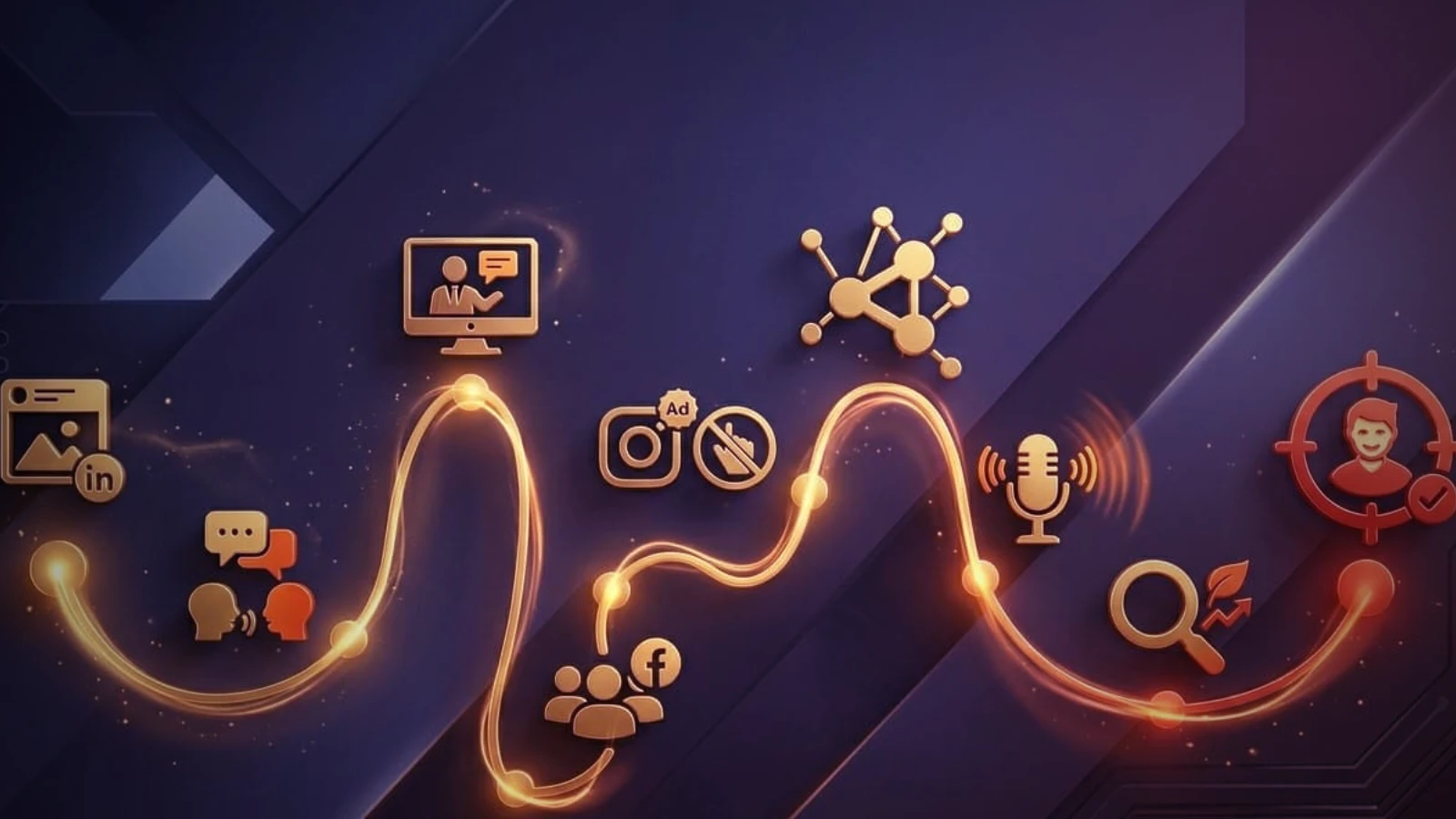
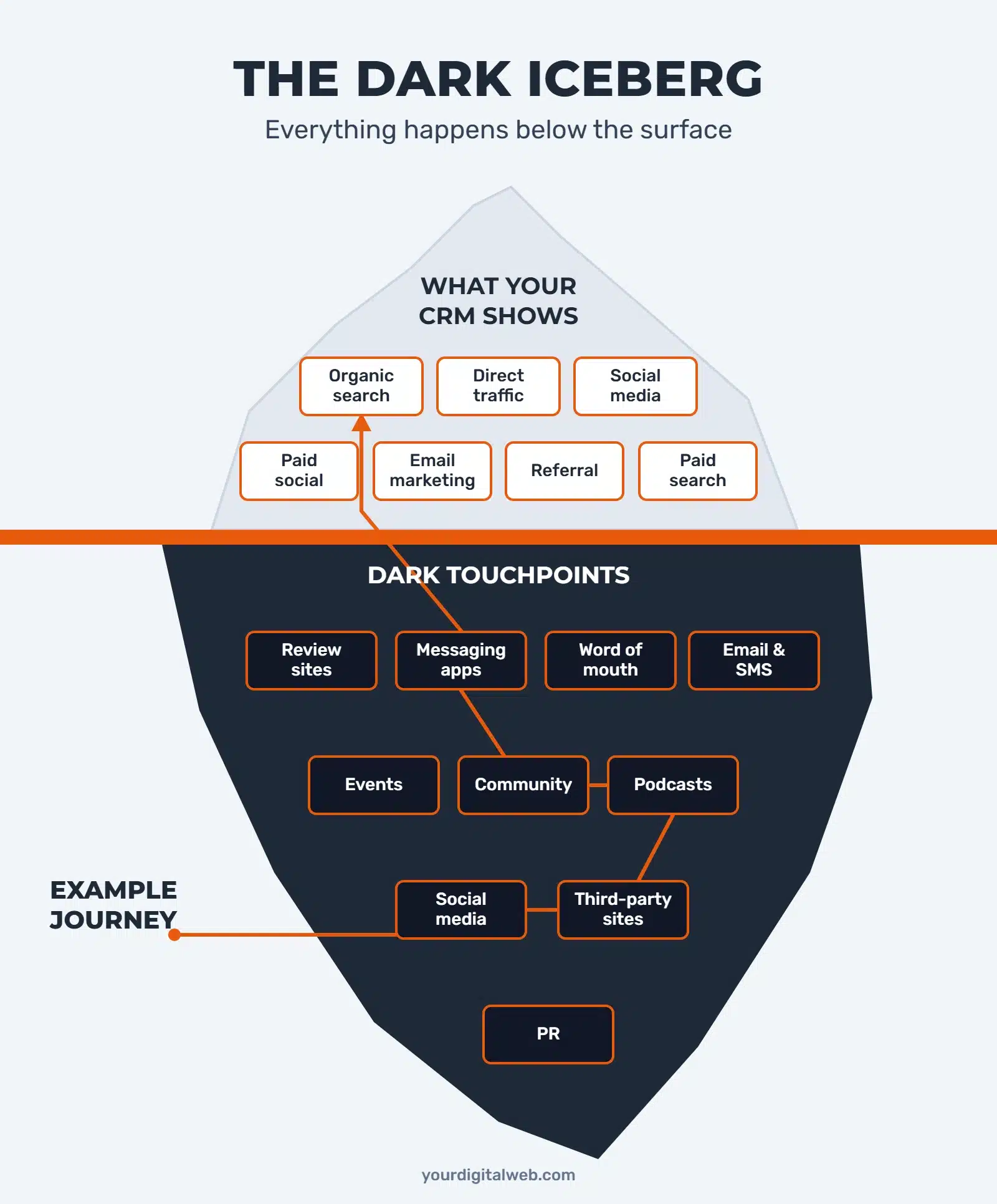
The Dark Funnel is the set of all those decision touchpoints that deeply influence a purchase choice but that your tracking tools can’t read in a linear way. It isn’t simply “invisible traffic” or digital word of mouth. It’s a complex ecosystem of conversations, repeated exposures, informal comparisons and trust signals that lead a company to choose you before it even asks you for a demo. All this happens when:
- One of your case studies is forwarded in a WhatsApp chat between two partners.
- Your company’s name is suggested during an internal alignment call.
- A Purchasing Manager looks up reviews about you while browsing incognito.
- The CEO of a target company reads three of your LinkedIn posts weeks apart, without ever liking or commenting.
- Your brand is recommended in a Slack group or an industry community.
- A prospect compares your offer with three competitors after hearing you mentioned on a podcast.
- A manager saves one of your technical articles and forwards it to the owner with a curt message: “These people seem to get it”.
None of these moments, taken alone, fires the conversion pixel. But, added together, they build the purchase decision.
Your customer doesn’t start getting to know you when their data appears in your CRM. They’ve already weighed, evaluated and chosen you long before.
Why talking about the Dark Funnel is better than talking about Dark Social
The two concepts overlap, but they’re not synonyms. Dark Social refers specifically to sharing links in private environments such as email, DMs and closed groups. It’s only part of the equation. The Dark Funnel is a much more strategic and mature concept for B2B. It includes Dark Social, but covers the entire process of trust-building that leaves no digital footprints in reports. At YourDigitalWeb, when we analyze a B2B client’s performance, the crucial question is never the trivial “Where does this click technically come from?”, but rather: “In which invisible ecosystem did the conviction form that led this customer to look for us?”
The big misconception: if I can’t see it, it isn’t happening
Many companies, and unfortunately many agencies, have developed an emotional dependence on trackable numbers. They’re reassuring metrics: sessions, users, CTR, cost per lead, last-click attribution models. They’re useful data, to be clear. But they become toxic when we mistake them for the only reality there is. In B2B, commercial reality is much messier, slower, more relational and more human than a spreadsheet can admit.
Anatomy of a real B2B conversion
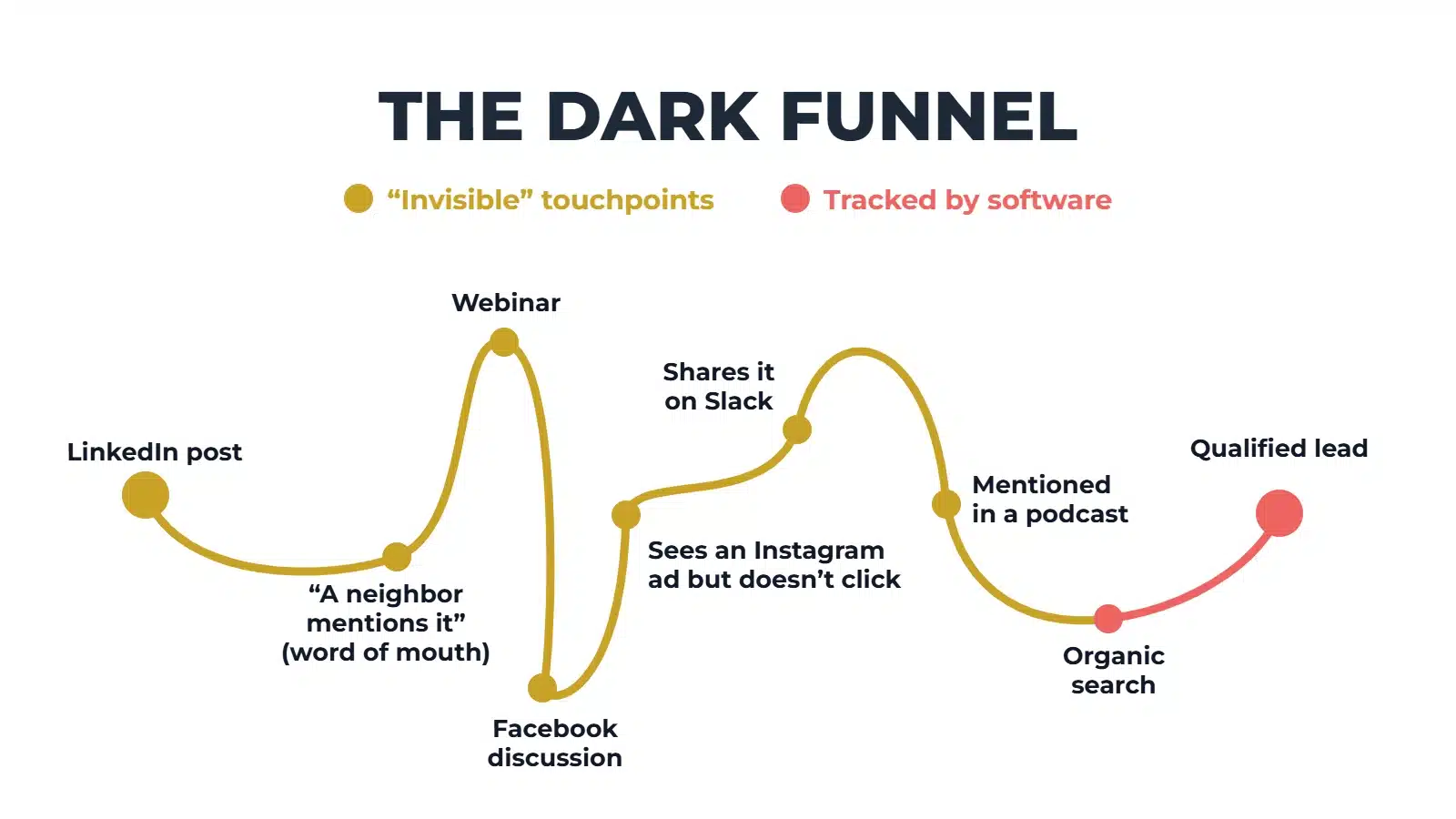
Let’s take a practical example. A manufacturing company is evaluating a solid partner to rebuild its web ecosystem and improve its online presence. Nobody fills in a form on the first try. Here’s what really happens:
- The Marketing Manager sees one of your sharp articles shared on LinkedIn.
- Three days later they visit your website. They don’t convert and they leave.
- A week later, a colleague forwards one of your case studies on Teams.
- In a plenary meeting, the owner asks for three credible agencies. Your name comes up among them.
- A month later, someone in the company searches for your brand name directly on Google.
- They land on the website and, this time, fill in the “Request a Consultation” form.
In the end-of-month report, that golden contact will be coldly labeled as Direct Traffic or Branded Search. But the real engine of the conversion was a dark journey made of content, reputation, repetition and authority.
Where does the Dark Funnel live? The 5 key ecosystems
If we want to tame this phenomenon, we need to know where to look. The Dark Funnel lives in all the places where people influence each other away from tracking.
- Private chats and closed work groups
WhatsApp, Slack, Microsoft Teams. A link of yours shared here, between professionals in the same industry, converts a hundred times better than a retargeting banner. In reports it will look like a direct visit; in reality it’s distributed trust. - Untraceable word of mouth
“I’ve seen these guys, they seem serious,” “People speak well of them,” “They have a more strategic approach than the others”. No pixel tracks these sentences said at the coffee machine or on a video call, but they’re the ones that get contracts signed. - Passive content consumption
Not everyone reads in order to leave their data. In fact, real decision-makers read precisely to avoid ending up in an aggressive funnel. An article read today settles in, builds authority and turns into a sales call six months later. - Vertical communities and micro-ecosystems
Niche groups, specialist forums, third-party webinars, industry newsletters. This is where B2B buyers build their mental shortlists of suppliers. They’re not just looking for companies; they’re looking for signs of social proof. - Unusual direct visits and branded searches
If you see direct traffic or searches for your company name increasing, it’s almost never a spontaneous miracle. It’s the final effect, the long wave of all the positioning work you’ve sown outside perfectly attributable channels.
Why the Dark Funnel throws SMBs into crisis, and how to get out of it
Large multinationals live peacefully with some opacity in their data, since they have huge budgets dedicated to pure brand awareness. SMBs, on the other hand, rightly want to understand one thing only: is the money we’re investing bringing in customers, yes or no?
The problem is that they look for the answer only in cost per lead or first-click attribution. In a complex market, this approach leads them to cut precisely the highest-value activities: the company’s consistent presence, in-depth case studies, the CEO’s positioning on LinkedIn, strategic newsletters. All activities that seem hard to measure in the short term, but they’re the only ones that truly prepare the ground for the sale.
From hunting leads to building demand
Much of traditional B2B marketing is based on the logic of interception: I create a PDF, put it behind a form, collect the email and unleash sales reps on cold calls. This model isn’t dead, but on its own it’s no longer enough. Because modern decision-makers don’t want to be intercepted too early. They want to form their own opinion, compare, understand your method and contact you only when they feel ready. Building demand means getting the market to recognize you and associate you with a specific problem, so that, when the need matures, you’re the only logical choice.
Two companies compared
- Company A (pure Lead Generation): launches an e-book campaign, collects 120 contacts and the sales team calls them all. Most don’t even remember who they are, the contacts are cold, quality is low and price competition is fierce.
- Company B (Demand Generation and Dark Funnel): shares strong analysis, publishes real insights and the CEO sets out a clear vision. It generates fewer form fills, but the prospects who write in are already aligned, don’t haggle over price and know exactly why they want to work with them.
In the first case you have volumes that soothe the ego. In the second you have real demand that drives revenue.
Signs the Dark Funnel is already working for you
Many businesses are going through this shift without realizing it. Here are the clearest symptoms:
- Leads “out of the blue”: you receive very detailed quote requests and, when you ask “How did you find us?”, the answer is a vague “We’d been following you for a while”.
- Unexplained increase in direct traffic: no active campaign justifies it, yet direct visits to service pages increase.
- Over-prepared prospects: leads don’t ask for generic information. They get straight to the point, know your method and use your own vocabulary.
- Content helps sales even if it doesn’t generate clicks: the sales team reports that customers cite articles or social posts during final negotiations to justify their choice.
- Natural growth in brand searches: people stop searching for the generic service on Google and start searching directly for “Service + Your Company Name.”
How to shed light on the Dark Funnel: less obsession, more intelligence
Accepting that the Dark Funnel exists doesn’t mean throwing up your hands and saying “Nothing can be measured anymore, let’s go by gut feeling”. On the contrary, it requires a more mature and honest measurement method. Here’s how we handle it at YourDigitalWeb:
- The fundamental question: “How did you first hear about us?”
Never rely only on the form’s preset drop-down menu. Leave an open, required text field. Or have sales reps ask this question out loud on the very first call. Real answers, such as “A supplier spoke highly of you”, are pure gold. - Read patterns, not the single click
Let’s start cross-referencing data: was there a spike in brand searches at the same time as a big push of content on LinkedIn? Is there an increase in direct visits from target company IP addresses? Let’s connect the dots. - Align marketing and sales with surgical precision
The Dark Funnel only becomes clear if marketing talks to the people who close the deals. Marketers see the numerical trends; salespeople hear customers’ telling phrases. Combining these two views creates real business intelligence. - Measure friction, not just volume
The best Dark Funnel KPI isn’t the number of forms received, but the quality of the sales process: are sales cycles getting shorter? Do customers push back less on price? Is there a greater alignment of vision?
The final verdict: the customer decides first
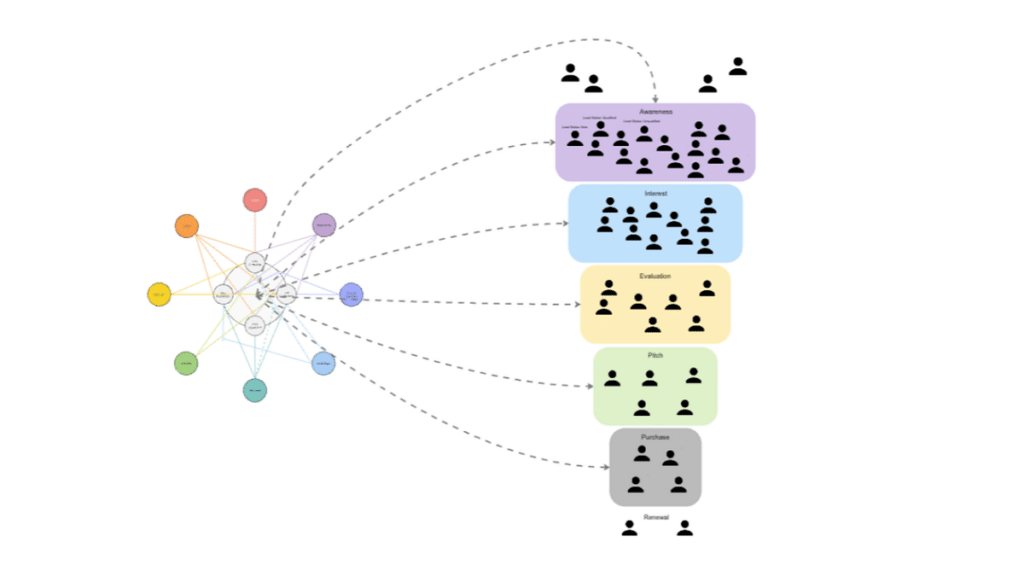
This is the only truth that matters in modern B2B marketing: the contact form is just the final formality of a decision already made elsewhere.
Your potential customer has already made up their mind, already filtered you and already compared you with the competition long before leaving you their email. Closing your eyes to this reality and continuing to squeeze GA4 for a perfect cost per lead means driving while looking only in the rear-view mirror. The Dark Funnel isn’t a mystery for marketing gurus; it’s simply where reputation and trust are born. Today, in B2B, the winner isn’t whoever spends the most buying cold clicks. The winner is whoever manages to settle in the market’s mind before even appearing in Analytics reports.