Table of contents 7 sections
“I’ve been burned by digital marketing before. I’ve already spent a lot of money and wasted a lot of time. I don’t want that to happen again.”
“My goal is to use digital like a sales rep: it has to bring me quote requests and qualified contacts that our customer care and sales teams can turn into actual customers.”
Those were the words of Francesco, Managing Director of Tecsaving, when he contacted me back in 2019, after hearing my talk at a training event for managers and business owners.
Let’s set the context: Tecsaving is a company based in Vicenza, Italy, that provides industrial climate control for large warehouses and industrial buildings. Its audience is exclusively B2B: warehouse owners, tradespeople, and owners of large industrial facilities.
How did we generate so many leads (and then sales) for a company in such a niche industry?
First, I want you to know I won’t hold back in this case study: just revealing the results wouldn’t be enough.
A real case study shares not only performance, but also:
- the problems and what didn’t work
- the obstacles along the way
- the (realistic) time it took to get results
- the budget spent
- the people involved
The starting point: SWOT analysis
The first thing we did was analyze strengths, weaknesses, opportunities, and threats:
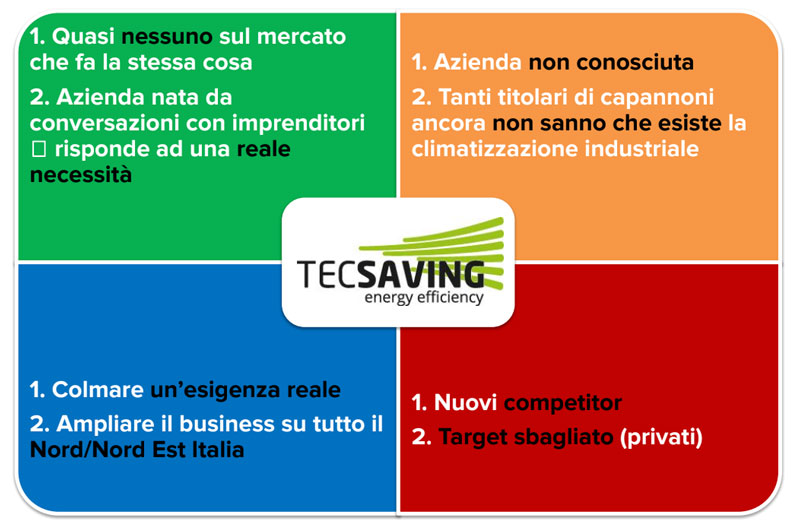
On one hand, Tecsaving was one of very few companies selling industrial heat pumps in northern Italy (its target region), and it met a real need of many business owners: cool air in summer and warmth in winter. On the other hand, the company was virtually unknown, so we would have to make the benefits of Tecsaving heat pumps clear right away.
Audience analysis
How can you deliver the right message to the right people if you don’t know your ideal customer?
Audience analysis helps you understand:
- which channels your audience uses, and therefore where Tecsaving needed to be
- what kind of message to build in order to “speak the audience’s language” and present Tecsaving as the solution to a specific problem
To get to know Tecsaving’s audience as deeply as possible, we worked on several fronts.
Surveys
We ran short surveys with people Tecsaving had booked appointments with, as well as current and past customers, asking specific questions such as:
- When did you realize you needed industrial climate control?
- If you could no longer use industrial climate control, what would you miss most?
- Have you tried other climate control solutions? You stopped using them because…
You can send quick, informal surveys like these by email using platforms such as Google Forms or SurveyMonkey.
PRO TIP: if the company has a customer service team, ask them directly for useful customer insights (best-selling products, complaints, recurring questions and doubts, and so on).
Quora
Do you know Quora? It’s not a social network.
It’s a Q&A platform where users (often ordinary people, not influencers or subject-matter experts) look for answers to their questions.
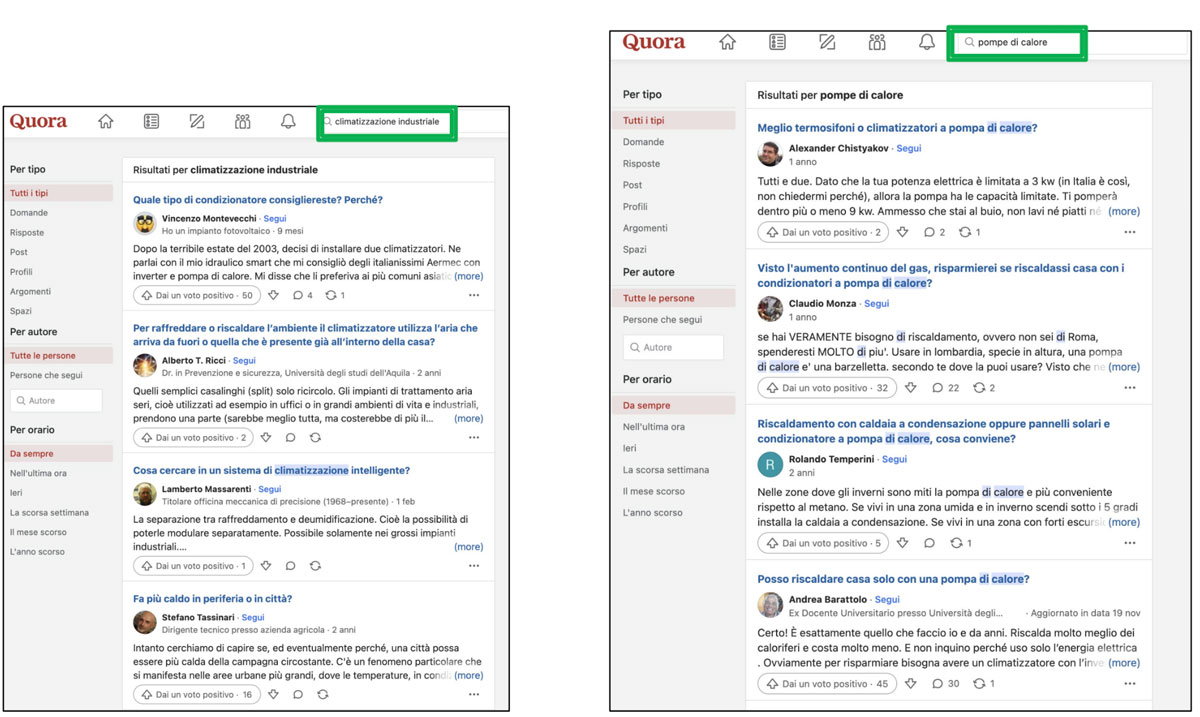
Type a keyword into the search bar and look at everything that comes up: besides understanding how people talk about a topic, you can gather a lot of useful material for content creation.
In this case, I researched “industrial climate control” and “heat pumps” and found that people care mostly about one thing: saving money.
Facebook and LinkedIn groups
I used the same research approach on two social networks where I knew warehouse and industrial building owners were likely to be present.
The goal was always the same: understand which topics related to industrial air conditioning people talk about.
PRO TIP: join groups that look relevant (look not only at the name but especially at the number of members, which should be meaningful, say at least 300), then read the conversations. You can also post questions yourself, like the ones listed in the surveys section.
Instagram hashtag research
Never underestimate a channel!
Who would have thought Instagram had posts tagged with Italian hashtags for heat pumps or industrial climate control?
In my case, I didn’t find posts from users but from Tecsaving’s competitors: a great way to monitor competitors’ strategy on Instagram.
Studying brand comments and reviews
Never forget to read carefully the comments and reviews people leave about your company on social media or platforms like Trustpilot.
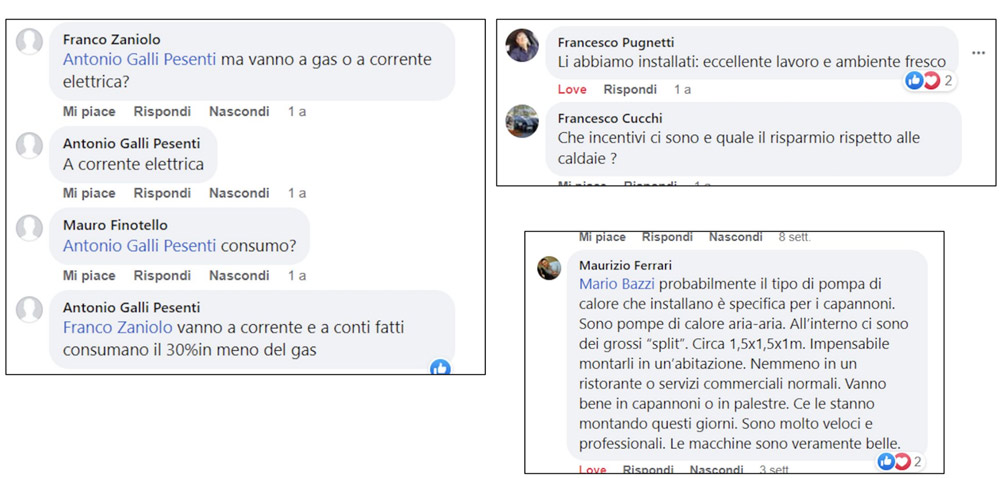
By analyzing comments on Tecsaving’s Facebook page, for example, I found perfect copy for building my ad messages, focused mainly on energy and cost savings:
The digital strategy
Contrary to what the “rules” of digital marketing suggest for winning over an audience and turning it into customers, we worked the other way around.
Let me explain.
Usually you follow the funnel and, at each stage, take actions to:
- build awareness
- create engagement
- convert
Well, we decided to start with conversions, then engagement, and finally awareness.
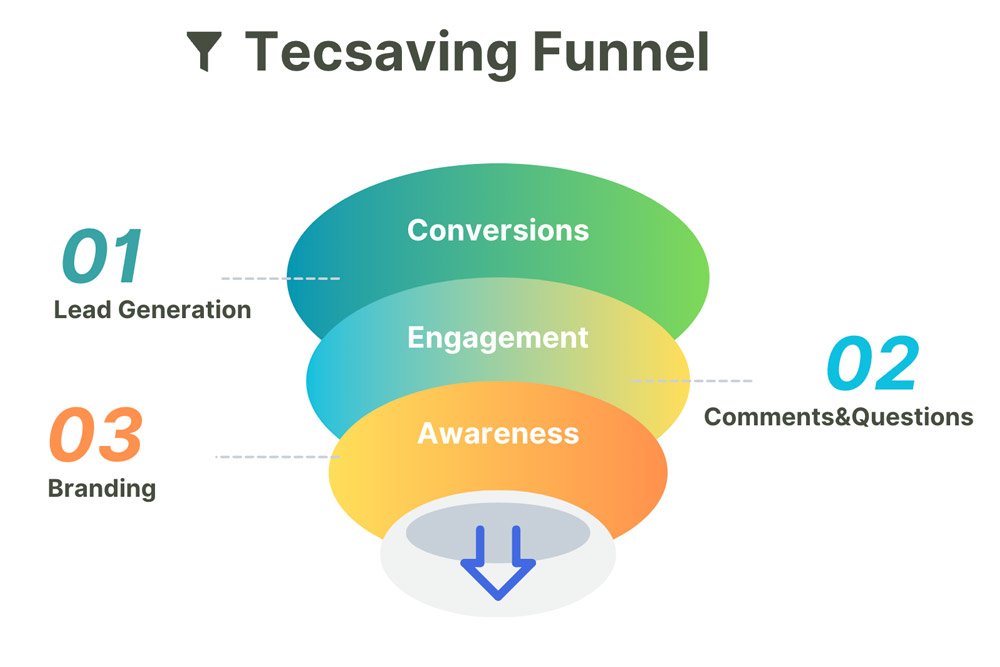
So we:
- created lead generation campaigns (Facebook Ads + Google Ads) that could deliver results (quote requests) right away, followed by SEO
- generated word of mouth with Facebook Ads campaigns
- worked on awareness to make the company known (Digital PR + SEO + Instagram Ads tests)
Why?
The company needed to generate conversions from day one: definitely a more challenging, harder path without prior demand generation and branding work, but an absolute priority for the sustainability of the business.
What we did
- Facebook Ads
- Google Ads
- LinkedIn Ads
- SEO
- Native advertising
- Lead generation tools
1. SEO
On the SEO side, we:
- ran an advanced SEO audit
- optimized the existing website’s pages: improved or added copy, improved titles and descriptions
- created new pages for key cities, such as this one for Mantua
- created a landing page on a separate domain, climatizzazionecapannoni.it, to strengthen the brand’s presence and get more results in the SERPs
- constantly analyzed conversions to push up the keywords that, based on the client’s feedback, had the highest conversion rate, not the highest search volume
- used Digital PR, with interviews and articles, to strengthen the website’s trust
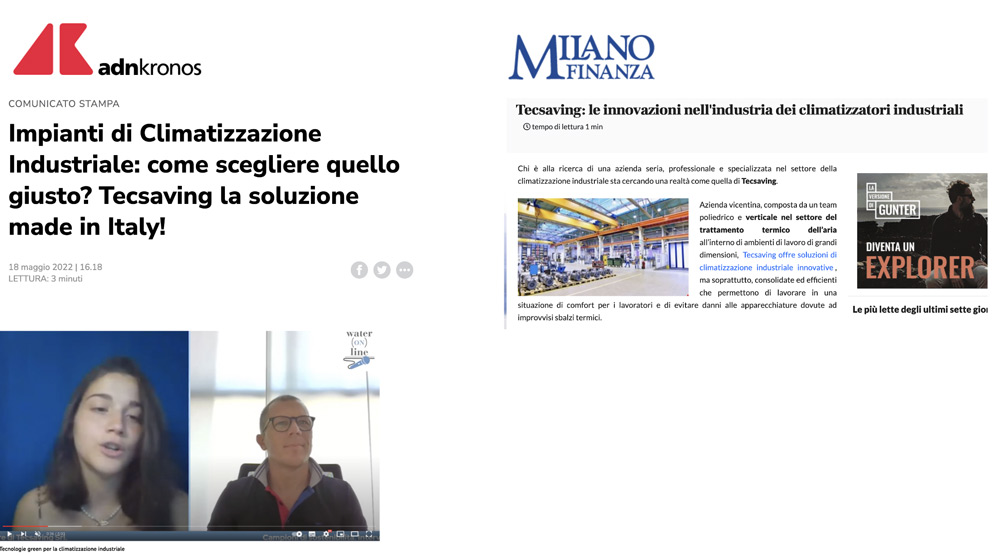
Six months after starting SEO work, the client’s most strategic keywords were on the first page of Google:
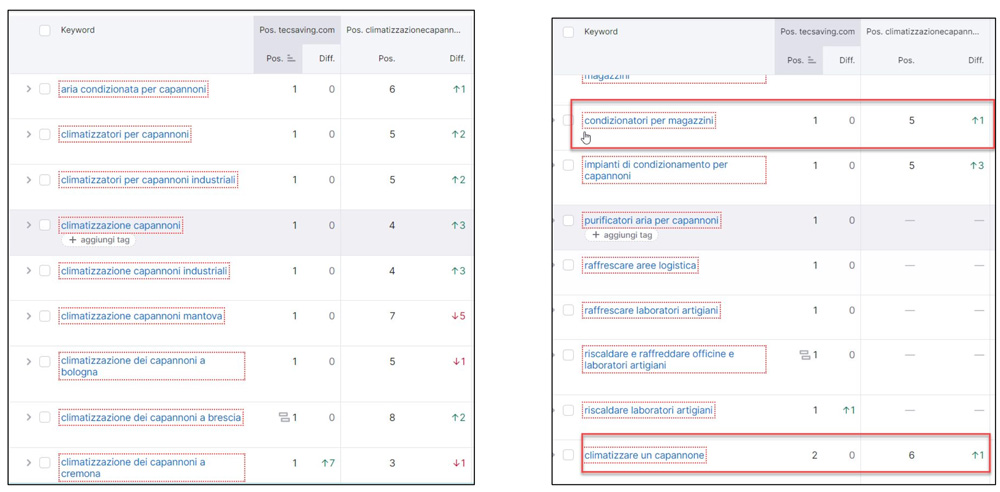
A great result? Absolutely, but one we achieved in six months, not two.
2. Landing pages
Before launching Google Ads and Facebook Ads campaigns, we created two landing pages for targeted users, because the corporate website wasn’t built for conversions: very informative (as it should be), with a scattered contact page full of required fields.
In a previous article we explained how (and why) to create a landing page to increase conversions.
We decided to test two different emotional triggers:
- on one side, saving money
- on the other, the physical and mental well-being of working in spaces that are warm in winter and cool in summer
We ran tests, one at a time so as not to change too many elements at once, on:
- the heading
- the copy
- the CTA
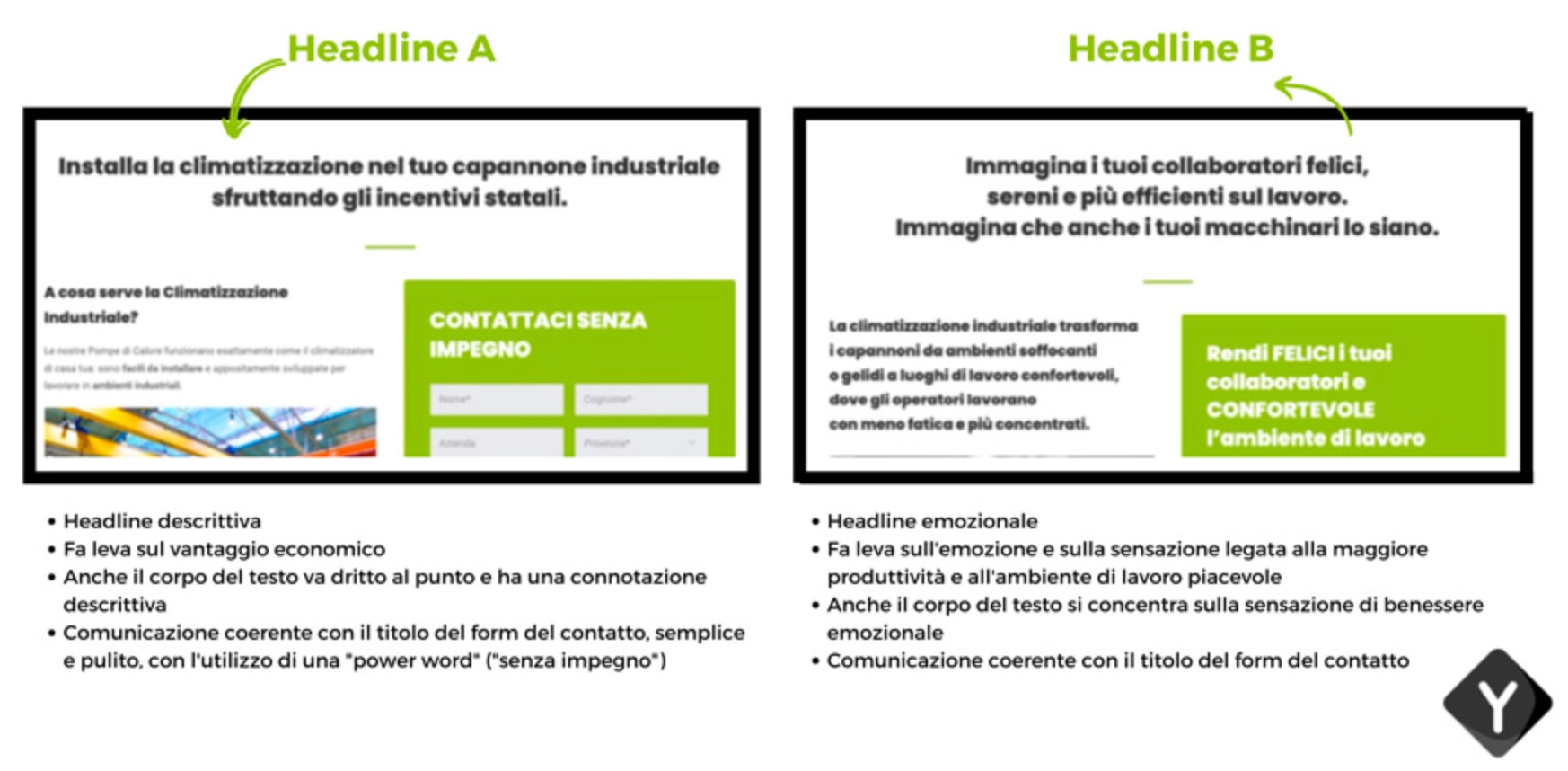
Together with the audience analysis, the tests confirmed that the best-performing landing page was version A, which focused on government incentives, and therefore on savings for the business owner.
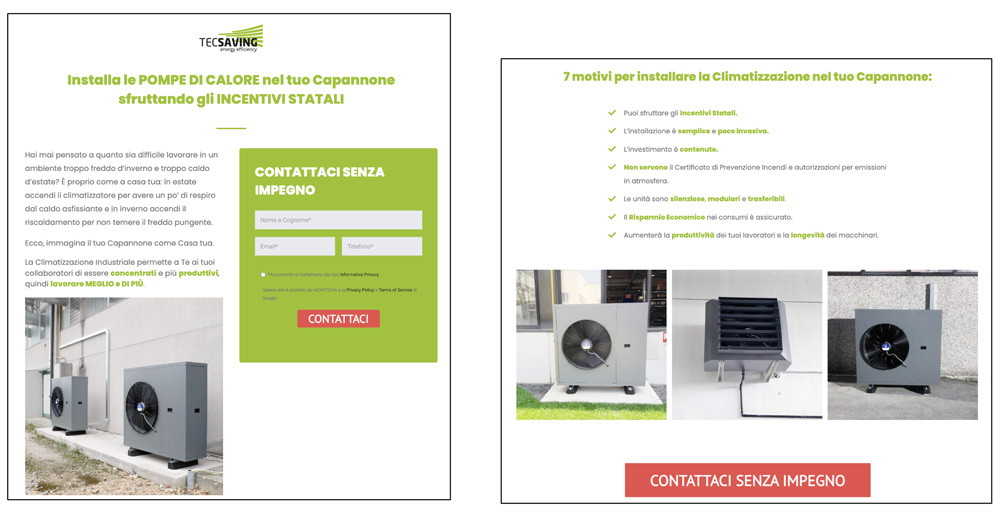
As we kept analyzing feedback from the leads we collected, we made further changes to the landing page, adding:
- the company phone number and email address in the contact form
- a WhatsApp chat
This led to 26% more leads.
When Roberta, a member of the company’s staff, asked leads how they preferred to contact Tecsaving, many said by phone or WhatsApp (fewer by filling in the form).
PRO TIP: note that the chat is handled by Roberta in person, not by a simple bot.
3. Google Ads
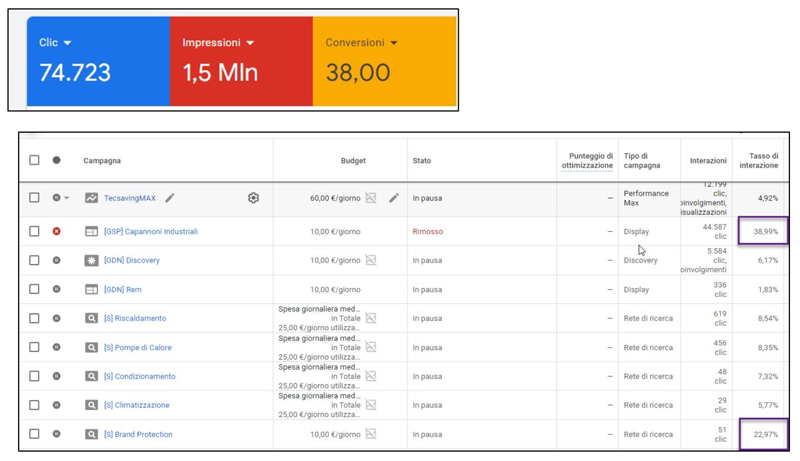
We created:
- Search
- Display
- Performance Max
- Brand protection
campaigns, focusing on strategic keywords for the brand, but in three months we got only 38 conversions: too few!
The best campaigns were Performance Max (10 conversions in one month) and the Gmail banner.
4. Native advertising
Native advertising helps a company get noticed by increasing website traffic and impressions, boosting brand awareness by placing content in front of a targeted audience.
Why did we use native advertising too?
At a trade show, Francesco realized while talking with potential customers that many people still didn’t know industrial climate control existed. So we decided to test this new channel (along with a few awareness campaigns on Facebook Ads) to introduce Tecsaving to a fairly targeted audience.
For example, we ran placements on Italian news websites such as Tiscali.it and TgCom24.it.
Visibility was good, but conversions were close to zero. That’s what we expected: native advertising is for awareness. Period.
5. Lead generation tools
Why not use lead generation tools?
You know, the ones that show you which companies visited your website? That way you can contact the right person to gauge the visitor’s actual interest.
These platforms generated some leads, but very few, especially compared with other channels, first of all Facebook Ads, and SEO.
Some of these tools are:
- Lead Champion
- Zendesk
- CallPage
6. LinkedIn Ads
After a careful audience analysis on LinkedIn, we found that part of Tecsaving’s audience was there, since we’re talking about purchase decision-makers.
So we decided to test the platform with a single campaign, knowing that if it didn’t deliver results within three months at most (even after the necessary adjustments), we’d stop it, given how expensive LinkedIn Ads can be.
- Campaign length: 3 months (September–December)
- Budget: €600/month | €20/day
- Audience: decision-makers, logistics staff, warehouse staff
The result? Lots of views, sure, but only one conversion!
So we asked ourselves: what didn’t work?
- A budget too low for LinkedIn (unfortunately there was no other option)
- We couldn’t run A/B tests
- We couldn’t test several different campaigns
- We didn’t do any demand generation first and went straight for leads (the client needed to feed a set number of leads to the call center)
- No retargeting
This shows that every expert knows what should be done in an ideal world, but the grand strategy then runs into the day-to-day reality of a business, which must always stay sustainable and scale over time.
Investments must be targeted and decisions careful.
7. Facebook Ads
This is the channel that has always brought in the most leads and sales.
So much for those who say, “Oh, Facebook Ads doesn’t work in B2B…”
We tested several campaign objectives:
- Website traffic
- Conversions
- Leads
We worked with new audiences (Tecsaving had NEVER run Facebook Ads before) and with retargeting.
We tested both single images and carousels.
We started with small budgets, €10 a day, and increased them based on returns. Today Tecsaving spends between €170 and €200 a day (depending on the month).
Facebook is the main channel for lead generation and sales growth.
Facebook Ads | PHASE 1
LEAD CAMPAIGN
- 3 months (September–December)
- €10 a day
- 4 ads, changing only the images
- interest-based audience: “heat pumps,” “energy efficiency”
- Long copy focused on heating, given the season
- Headline with magnet words, aimed at solving a problem for the audience
Phase 1 | Results
- 8 leads in total (over three months)
- “Dirty” leads: many private individuals (outside the target)
The beginning is the hardest part: you need to set up the strategy, see how the audience reacts, and analyze costs and the best-performing ads.
Facebook Ads | PHASE 2
2.1 | LEAD CAMPAIGN
- €25/day
- Retargeting (website + former customers’ emails)
- Gyms excluded from the audience (at Francesco’s request)
- Geotargeting: Lombardy, Emilia, Veneto, Friuli
- 7 ads created, testing both images and copy
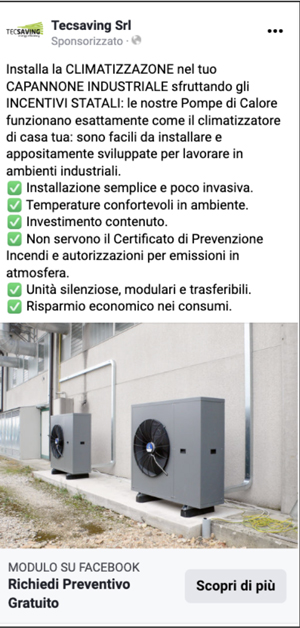
The ad that generated the most leads had:
- an image representing the product
- long copy focused on benefits
- a headline with a magnet word and a clear CTA
Lead campaign results
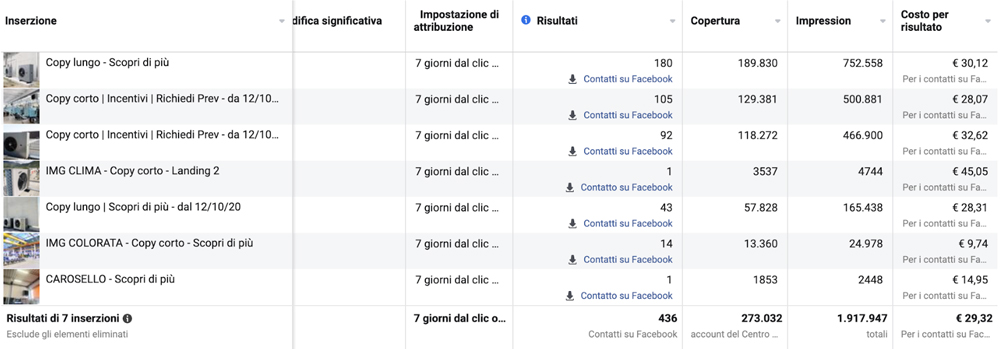
PRO TIP: is the cost per lead high? Is it low? My answer is always the same: we decide together with the client. Are they willing to spend €30 per contact?
Tecsaving was, and it paid off handsomely, because most of these leads became customers, for a product that costs around €5,000 per heat pump on average.
2.2 | LANDING PAGE CONVERSION CAMPAIGN
- €25/day
- Retargeting (website + former customers’ emails + leads from the previous campaign)
- Gyms excluded from the audience
- Geotargeting: Lombardy, Emilia, Veneto, Friuli
- 4 ads: same image, different copy (long vs. short)
Conversion/sales campaign results
Far fewer contacts, but much higher quality (from lead to appointment to sale).
Facebook Ads | Current phase
1.1 | LANDING PAGE SALES CAMPAIGN
- Event: “Contact”/Lead
- Budget: €150/day
- Retargeting only
- The image that has always performed best
- Long copy focused on benefits
- Focus on cooling only, given the season
- Reactivation of a campaign that had performed well in the past
1.2 | LANDING PAGE TRAFFIC CAMPAIGN
- Event: “Contact”/Lead
- Budget: €50/day
- “Heat pump” interest only
- The image that has always performed best
- Long copy focused on benefits
- Although our goal is conversion, we’re testing the traffic objective, which drives many landing page visits and leads. We’re monitoring lead quality day by day.
Digital marketing results
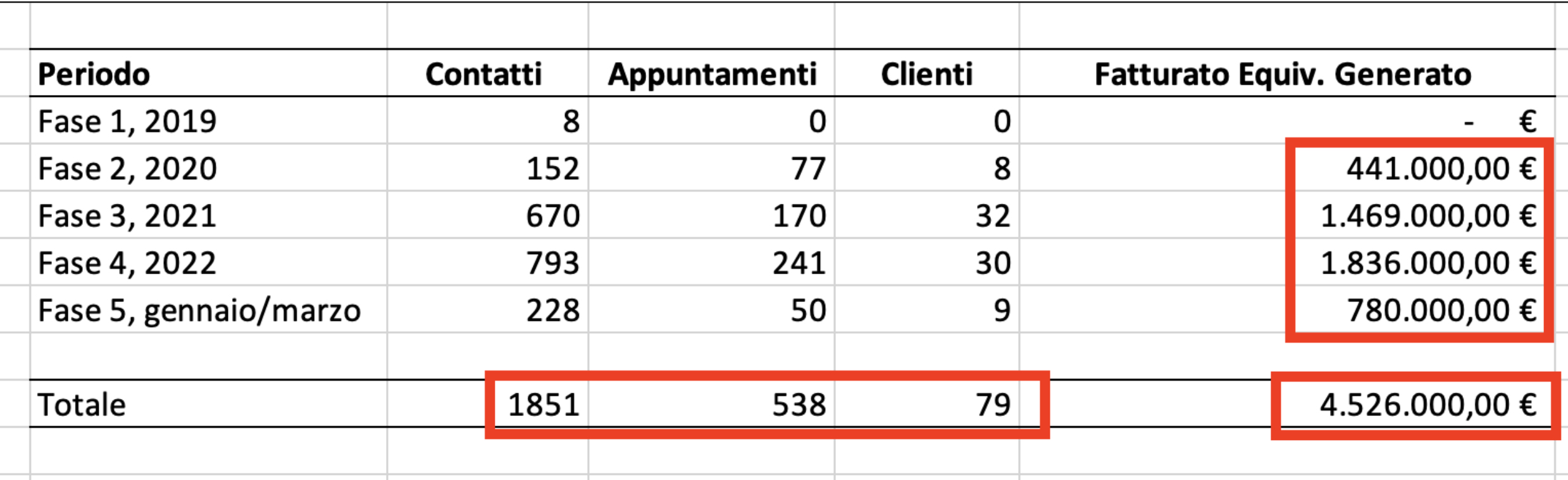
Results and revenue from digital marketing, from October 2019 to March 2023:
Next steps
- Improve Facebook Ads cost per lead
- Test Google Ads again
- We’re rebuilding the website, starting from UX and CRO analysis
- We’re redesigning the landing page contact form
- We’re about to launch the blog, essential for SEO and for showing authority
Takeaways
- Real business results (quote requests, more sales, higher revenue) take consistency, perseverance, and dedication.
- Testing is essential: test channels, platforms, copy, landing pages, and CTAs.
- Give it time: it can take months to know whether a channel performs well.
With Tecsaving, it took us about four months to find the right Facebook Ads strategy!
- The client–consultant relationship needs respect, trust, and transparency.
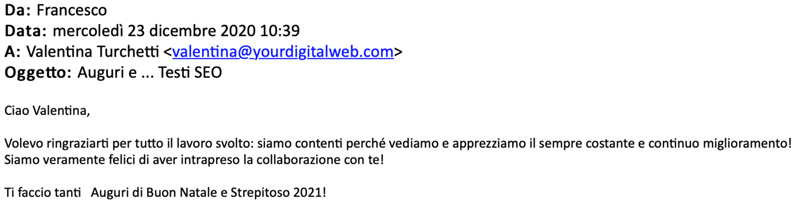
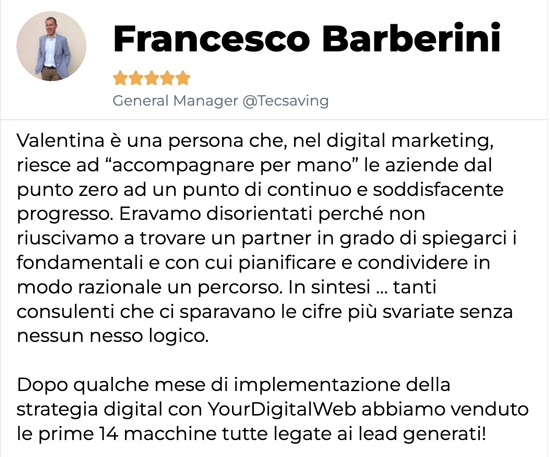
Francesco always told me: “Valentina, I trust you completely. I give you the annual digital budget, and it’s up to you to decide how and where to spend it. Treat the company as if it were yours. I trust you.”
- Don’t get carried away by everything you read on blogs or hear in videos: use it as a starting point, but always test and adapt a strategy to your business, because it will rarely work the same way for other companies.

Valentina Turchetti
Co-founder of YourDigitalWeb
Co-founder of YourDigitalWeb, she works on digital strategy, lead generation and communication for companies. She speaks at marketing events and talks, from TTG to Social Media Strategies.
One click and, when you search for SEO, AI and marketing, our articles will show up more often in Google’s Top Stories.