Table of contents 2 sections
Google Trends is a useful tool for improving a website’s SEO and marketing, a product offered by Google and available to marketers at any time.
Google Trends is a free tool offered by Google that lets you analyze the popularity of searches for specific keywords over time. It’s a powerful resource for SEO experts and marketers who want to spot emerging trends, optimizing content and develop more effective marketing strategies. Unlike other keyword research tools, Google Trends provides real-time data on searches, letting you spot sudden spikes of interest and long-term trends. This makes it particularly useful for seasonality-based strategies and for analyzing market demand. It also helps understand user behavior, offering valuable insights for content creation and for defining advertising and marketing strategies.
How does Google Trends work?
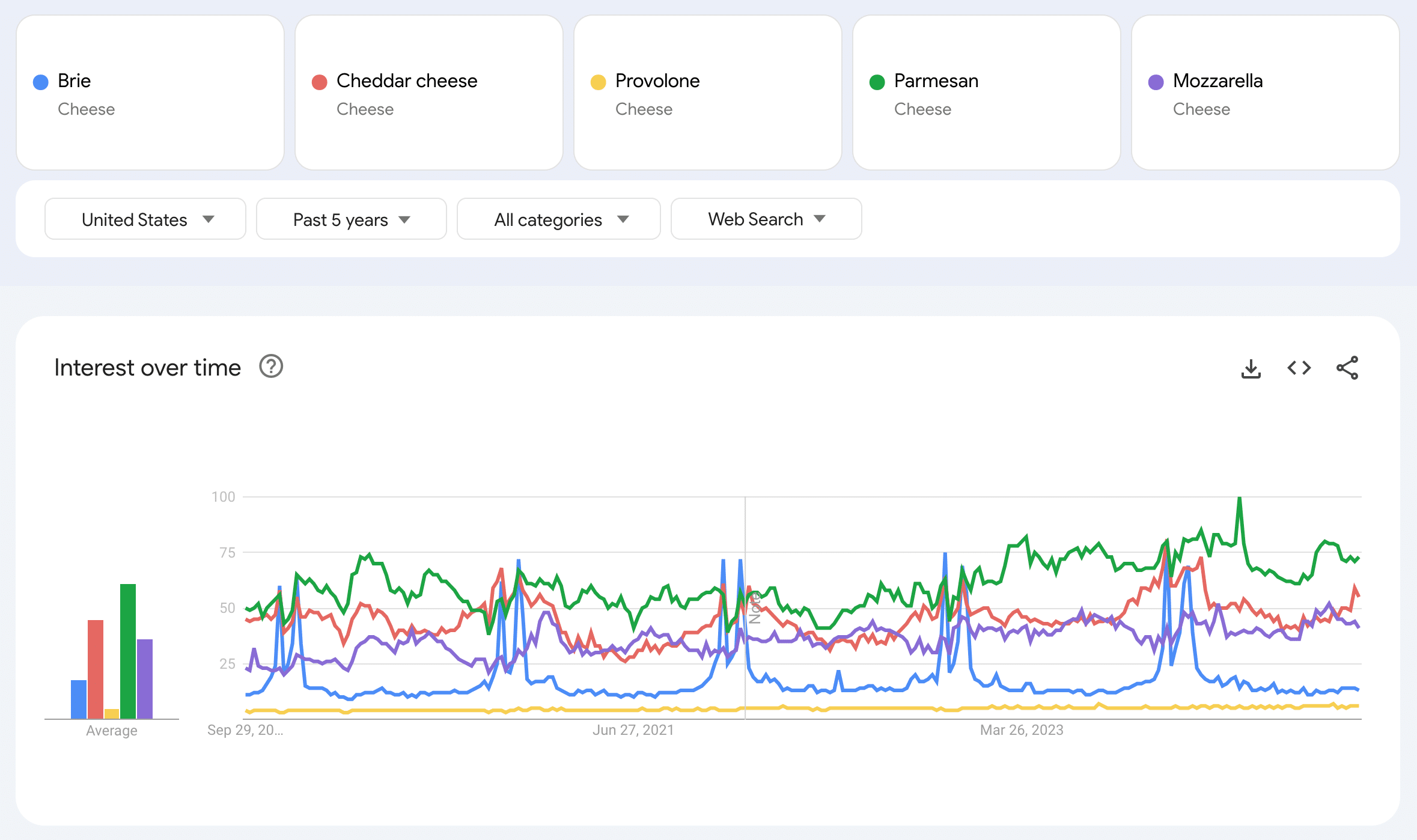
Google Trends analyzes searches made on Google and represents them graphically to show how interest changes over time. The data doesn’t represent the exact number of searches, but a normalized value on a scale from 0 to 100, where 100 is the peak interest recorded for that specific keyword. Main Features:
- Interest over time: shows how a keyword’s search volume changes, letting you understand whether interest in a topic is growing or declining.
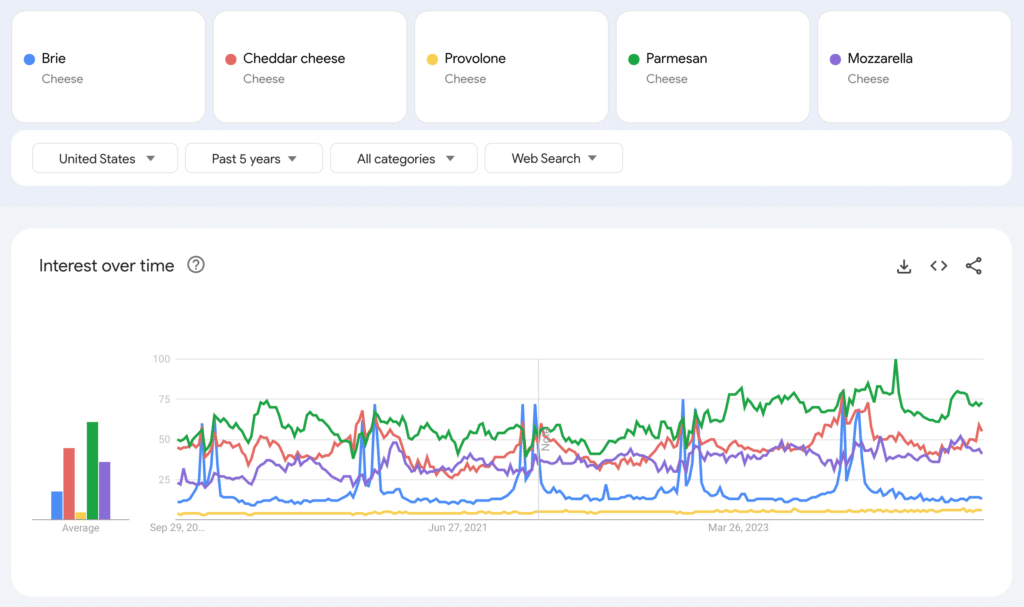
- Keyword comparison: you can compare up to five terms to see which is searched most, useful for making decisions based on real data.
- Geographic distribution: lets you see interest by region or city, so you can tailor SEO and marketing strategies to local needs.
- Related queries: shows similar searches gaining popularity, providing ideas and inspiration for content and products.
- Seasonal trends: helps identify recurring search peaks, essential for planning ad campaigns and promotions.
- Advanced filters: lets you segment data by specific criteria, such as time period, search category and platform (Google Search, YouTube, Google Shopping, etc.).
How to use Google Trends for SEO and more
Google Trends can be used to optimize SEO strategies in several ways; let’s look at them below.
Finding trending keywords
If you run a blog or an e-commerce store, knowing which keywords are growing lets you create relevant content before your competitors. Google Trends lets you identify emerging keywords that could significantly affect your site’s traffic.
Example: A travel site might discover that searches for “sustainable vacations” are increasing and publish articles on eco-friendly destinations and responsible travel before the topic becomes saturated. It could also use Google Trends to analyze related keywords like “eco-friendly hotels” or “responsible tourism” to create more specific content.
Seasonality analysis
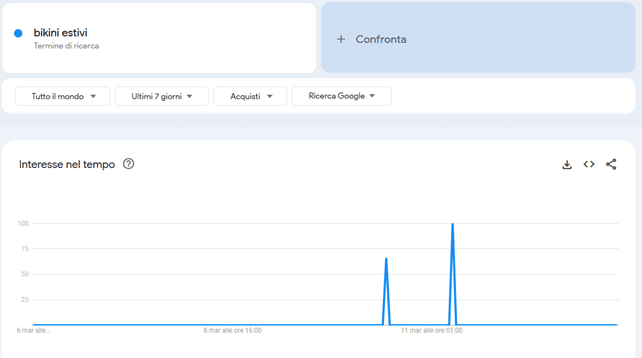
Many industries have seasonal cycles. With Google Trends, you can plan content and ad campaigns around periods of peak interest. This is useful not only for industries like tourism and fashion, but also for recurring events such as Black Friday or back-to-school.
Example: An online swimwear store might notice that searches for “summer bikinis” grow from March to June and plan promotions accordingly, increasing the ad budget in those specific months. At the same time, it could identify related queries like “best swimsuits for curvy women” to create targeted content and broaden its audience.
Local SEO
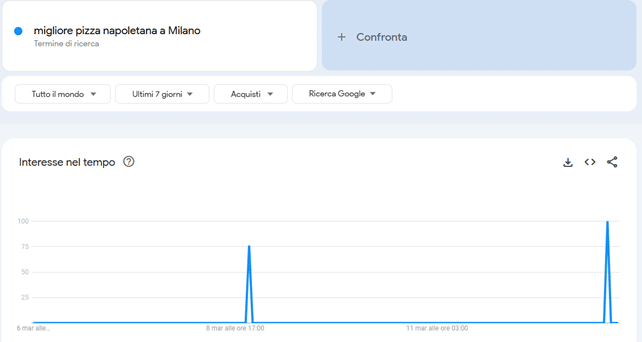
If you have a physical business, you can check the most searched keywords in your area and optimize local content. This is essential for businesses that depend on a local audience, such as restaurants, shops or professional services.
Example: A restaurant in Milan might discover that “best Neapolitan pizza Milan” is heavily searched and optimize its site for that keyword, including reviews, menu and testimonials from local customers. It could also compare search trends with other cities to see whether its product has potential in new areas.
Competitor analysis
You can compare your brand with your competitors’ to understand which strategies work best. If a competitor sees a sudden growth in searches, it may be worth analyzing why and adapting your strategy accordingly.
Example: A clothing brand can compare its name with competitors’ and assess relative popularity, understanding whether its marketing is having the desired impact. If a competitor records a spike in interest, it could be due to a viral promotion or a particularly popular new collection.
How to use Google Trends in marketing
Beyond SEO, Google Trends is a valuable ally for marketing. Here are some effective strategies for using it.
Spotting emerging trends
Monitoring trends lets you create products or ad campaigns that ride the wave of public interest. Google Trends helps identify new business opportunities before they become saturated.
Creating viral content
Using Google Trends to find trending topics can increase traffic and engagement on social media and blogs. Creating content on topics gaining popularity increases the likelihood that it will be shared and discussed.
Planning ad campaigns
Knowing when a keyword is searched most helps you invest in PPC (pay-per-click) at the right time. This lets you maximize the return on your advertising investment, avoiding spending budget during periods of low demand.
Optimizing YouTube videos
Google Trends lets you filter results for YouTube, helping you choose the best topics for your videos. This is especially useful for content creators who want to capitalize on popular topics and increase views. Google Trends is an essential tool for anyone who wants to improve their SEO and marketing strategy. By analyzing search trends, you can get ahead of the competition, create relevant content and optimize ad campaigns. Making the most of Google Trends means always being one step ahead in digital, adapting your strategies to changes in user behavior. With constant, in-depth analysis, you can not only improve your online visibility, but also build a lasting competitive advantage.
Using Google Trends in Advanced Ways for SEO and Marketing
Google Trends is an essential tool for SEO and digital marketing, but to get the most out of it you need to go beyond the basic features. Below you’ll find advanced, original professional strategies you can implement right away in your analysis routine. YourDigitalWeb uses this tool integrated into AI-based systems to give our clients advanced analysis and forecasts that are useful beyond SEO 🙂
Predictive Identification of Micro-Trends
Google Trends lets you catch hidden micro-trends before they become obvious to the general public. Using a narrow time filter (for example the last 7 days), you can spot small peaks that signal potential emerging interest and act on them quickly.
Example: If you work in fashion, you might notice sudden increases in searches like “urban hiking shoes” and immediately launch targeted campaigns or exclusive content that position you as a forerunner of that trend.
Advanced Use of Search Operators
By combining Google Trends with advanced Google Search operators (such as quotes for exact matches or the asterisk to include variants), you can run more detailed, refined analyses.
Example: Instead of simply searching for “sports shoes,” use operators like “sports shoes +2025” to see whether there are spikes of interest tied to upcoming events, trade fairs or expected innovations in your industry.
Cross-Analysis with E-Commerce Data
Combine Google Trends data with e-commerce analytics to understand whether increased interest actually corresponds to more conversions or is just curiosity.
Example: If you notice a spike in searches for “eco-friendly backpacks,” cross-reference this data with actual sales on your store to quickly validate the market opportunity.
Advanced Segmentation by User Type
Use Google Trends to segment your audience through the category and platform features (Google Shopping, Google Images, YouTube), getting precise data for each segment.
Example: A fashion brand might find that “vegan bags” are trending on Google Shopping, while on YouTube searches for “sustainable minimalist style” tutorials are stronger. You could then develop different content adapted to the platform users are on.
Advanced Product Life Cycle Analysis
With Google Trends you can identify which stage of the life cycle a product or service is in (introduction, growth, maturity, decline) by looking at the long-term popularity of related keywords.
Example: By analyzing the term “smart speaker,” you could understand whether the product is still growing or reaching saturation, and decide whether to invest in remarketing campaigns or refresh your offer.
Advanced PPC Campaign Planning Based on Micro-Peaks
Google Trends can show micro-peaks of interest on a daily or weekly basis. By identifying these moments, you can optimize your pay-per-click (PPC) budget, focusing on periods of peak attention and reducing spend at less profitable times.
Professional example: If you find that searches for “online yoga course” rise sharply every Monday morning, you can step up your PPC campaign on that day of the week only, maximizing conversions.
Strategic Combination with Looker Studio (Google Data Studio)
By integrating Google Trends data with Looker Studio dashboards, you can create interactive visualizations and in-depth reports to continuously monitor keyword trends, enabling quick decisions based on concrete, up-to-date data.
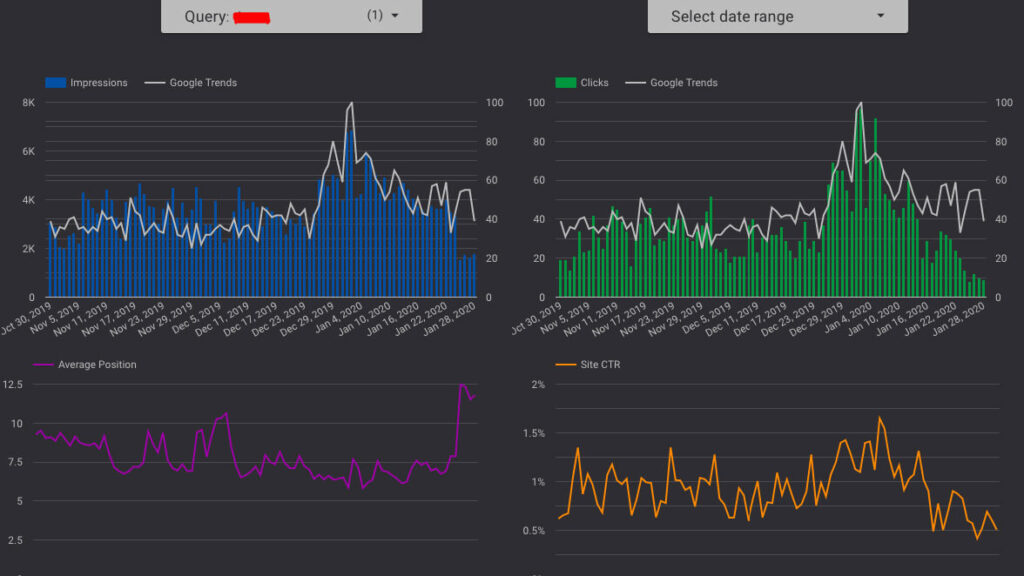
By implementing these advanced strategies, Google Trends will become a powerful ally for improving marketing performance, setting you apart through analysis, trend anticipation and strategic innovation. Rely on us to make the most of digital marketing!

Marco Maltraversi
CEO and founder of YourDigitalWeb
He founded YourDigitalWeb in 2009 and is an SEO and GEO consultant with a background in software engineering. He has written books on SEO and artificial intelligence, including “Generative SEO” (Edizioni LSWR), teaches in university programs and runs the DeepSEO training program. He has spoken at SMAU, Web Marketing Festival and Search Tech.
One click and, when you search for SEO, AI and marketing, our articles will show up more often in Google’s Top Stories.